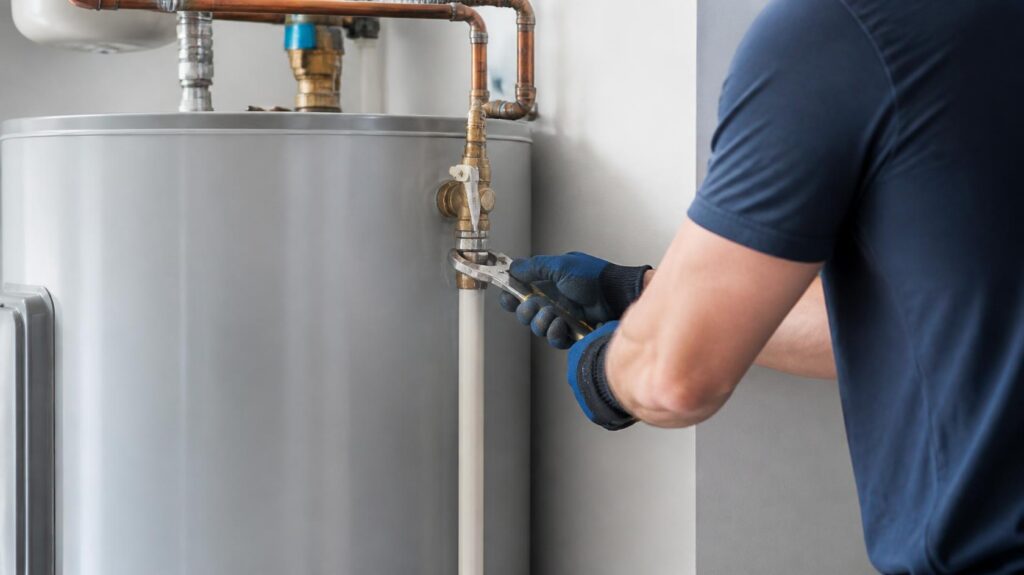
Water heater leaks in San Antonio are shaped by the city’s specific water conditions in ways that make them both more likely and more deceptive than leaks in softer-water cities. SAWS supply pressure variations across the city’s distribution network, combined with Edwards Aquifer mineral content that corrodes metal fittings and deceives the eye with scale deposits that can look like intact joints, create conditions where leaks develop at predictable points but are often misread until they have caused meaningful damage. At Rainstone Water Heaters, we provide professional water heater leak detection for San Antonio homeowners, tracing the source of every leak with structured diagnostic techniques and a clear understanding of how San Antonio’s water and architecture combine to produce the specific leak patterns we find across the city’s diverse property stock. Call us today at (210) 972-1022 to book a service.
Water finds the path you cannot see, and by the time a water heater leak shows itself, it has usually been traveling for a while. I am Kurt Pinkerton, Rainstone’s responsible master plumber — leak work is detective work, and we treat it that way. Here in San Antonio, my team works out of our San Antonio office, and the standard is the one I set: a $125 service call, a written quote before work begins, and no surprises on the invoice. Call us at 210-972-1022.
How San Antonio’s Water Conditions Create Specific Leak Risk at Water Heater Connection Points
Kurt’s take: In Houston I ran service crews of as many as 30 plumbers as a production manager, and I learned to spot a shortcut from across a parking lot. Water goes where it wants, and the stain on the ceiling is rarely under the source. Tracing a leak is patient work — fittings, valves, the tank body itself — and anyone who pronounces a verdict from the doorway is guessing with your drywall. Between historic neighborhoods and fast new subdivisions, San Antonio asks one water heater crew to be fluent in two centuries of housing — sometimes on the same call day. So on my jobs the permit gets pulled and the inspection gets passed, even on the houses where nobody would have checked.
Water Pressure Variation Across SAWS Zones and Its Effect on Fittings
SAWS supplies water at varying pressures across different zones of San Antonio’s distribution network, and in some service areas the supply pressure is high enough that minor weaknesses in water heater fittings, which might remain stable for years at moderate pressure, are pushed into active leak territory more quickly. A threaded nipple connection at the top of a water heater tank that is subject to sustained high supply pressure experiences greater mechanical stress at the joint than the same connection on a lower-pressure supply, and the combination of that mechanical stress with the corrosive action of Edwards Aquifer hard water on the metal at the joint accelerates the deterioration of the seal. In practice, this means that water heater connections in some San Antonio SAWS supply zones fail sooner than equivalent connections in properties on lower-pressure distribution lines, and the failure presents as a leak at the fitting rather than at the tank body itself.
San Antonio homeowners in areas where SAWS supply pressure is notably high may benefit from a pressure-reducing valve installed at the property’s main supply entry, which brings the pressure entering the entire plumbing system within the range where fitting stress is minimized. Our technicians check supply pressure at the water heater as part of every leak detection service in San Antonio, identifying whether an elevated supply pressure is contributing to the fitting stress that produced the leak and advising on the installation of a pressure-reducing valve where the measurement indicates this would be beneficial. Addressing the underlying pressure condition rather than simply replacing the leaking fitting reduces the probability of a recurrence at the same or an adjacent connection point.
How Hard Water Creates a Deceptive Picture of Fitting Integrity
One of the more counterintuitive aspects of water heater leak detection in San Antonio is the way that Edwards Aquifer mineral deposits can make a corroded or leaking fitting appear visually intact to a homeowner who has not been trained to read the signs correctly. Calcium carbonate deposits that form around a threaded fitting as mineral-laden water repeatedly contacts the metal at the joint can fill the visible gaps and surface texture of the fitting with a grey-white scale crust that resembles a solid, well-sealed joint from the outside. Beneath this crust, however, the actual metal threads may be substantially corroded and the sealing compound around the joint may have failed entirely, with the scale deposit temporarily bridging the gap and slowing the visible leak to a level that the homeowner interprets as minor seeping rather than an active joint failure.
Our technicians identify this pattern by examining the scale deposit closely for any signs of moisture or active weeping at the edges of the crust, checking the surrounding surface for staining patterns that indicate a longer-term slow leak, and applying gentle pressure to confirm whether the fitting body itself is compromised beneath the mineral coating. In older San Antonio neighborhoods where attic water heater installations are prevalent, a slow drip from a connection at the top of the tank that has been bridged by mineral scale may have been depositing water into the ceiling cavity below the tank for weeks or months before the staining becomes visible on the ceiling surface of the room below. Detecting this type of leak before the accumulated moisture causes structural damage requires the kind of methodical professional assessment that our San Antonio leak detection service is specifically designed to provide.
Leak Tracing in San Antonio’s Attic, Garage, and Interior Closet Installation Types
The three primary water heater installation environments in San Antonio’s residential properties — attic, garage, and interior closet — each present distinct leak tracing challenges that reflect both the installation height and the surrounding building materials. Attic leaks are the most difficult to detect early because the water that escapes the unit travels through the insulation layer and the ceiling material before becoming visible in the living space below, and by the time ceiling staining appears, the insulation and the ceiling structure have typically been absorbing moisture for an extended period. Garage leaks are more visible but their water routing on a concrete slab floor can be misleading, as water from a dripping fitting at the top of the unit travels down the tank exterior and pools at the base, which homeowners sometimes misread as a bottom-of-tank failure when the actual source is a connection fitting several feet above.
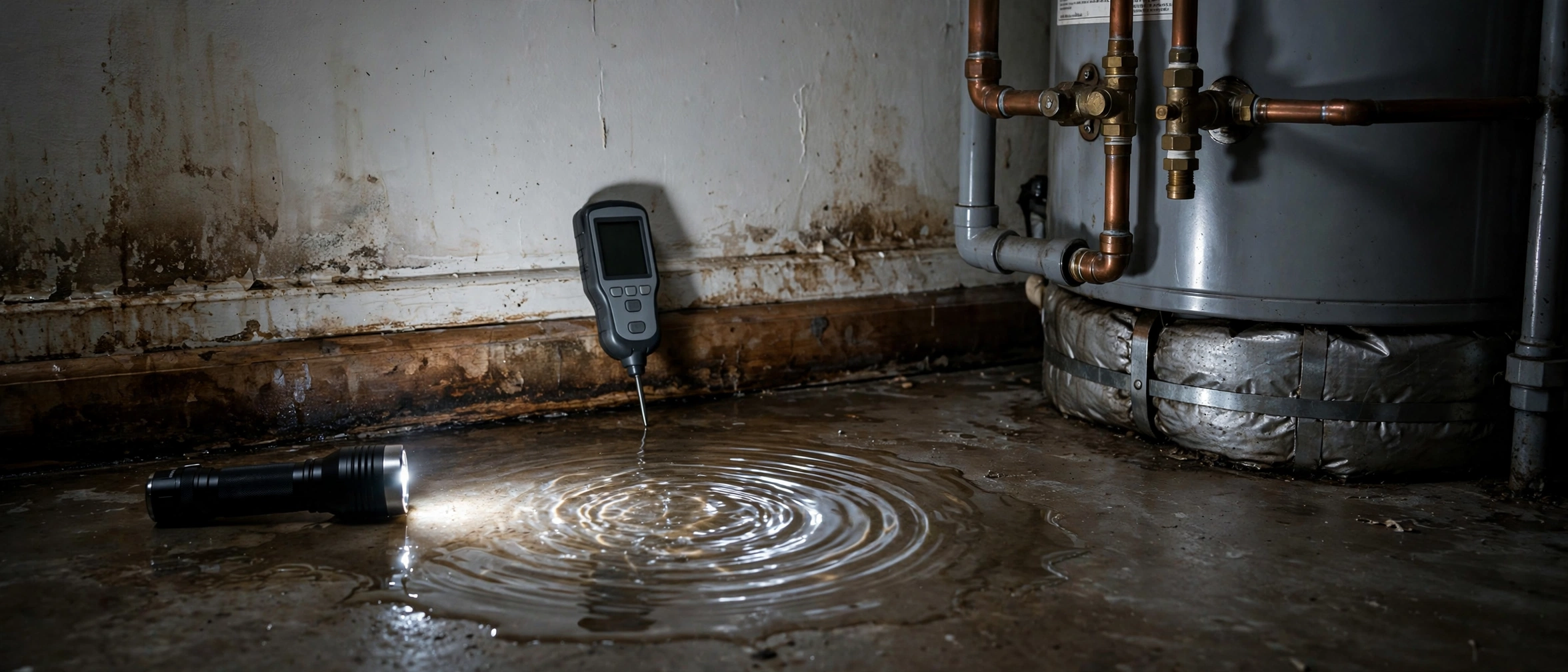
Interior closet leaks in San Antonio’s older properties present a third challenge: the confined space and the proximity of finished wall surfaces mean that moisture from a leaking fitting can enter the adjacent wall cavity and travel along the framing before appearing at a location that does not obviously point back to the water heater. Our technicians trace leak pathways in each of these installation environments using a combination of visual inspection, surface dryness testing, and where appropriate, moisture meter readings on adjacent building materials, to establish the actual travel path of the moisture and confirm the source fitting or component at which the leak originates. This structured approach prevents the common outcome where a fitting is replaced based on its proximity to visible moisture when the actual leak source is at a different point entirely.
Leak Consequences and Water Damage Patterns Specific to San Antonio Properties
Kurt’s take: My standing rule on every job I sign for is simple: leave the home as clean as it was in the beginning, if not cleaner. Never let anyone sell you a water heater for a leak they have not traced. I have seen sound tanks condemned for a failed fitting that cost less than the service call, and I have made our crew show the homeowner the actual source before we quote the actual fix. Our San Antonio crews run 5 AM to 11 PM, seven days a week, because this city’s heaters fail on their own schedule, not ours. When we leave, the job carries a warranty, and the home is left as clean as we found it — if not cleaner. — Kurt Pinkerton, Responsible Master Plumber, Lic. # M-21546
Water Damage in San Antonio’s Summer Humidity: Why Slow Leaks Escalate Quickly
San Antonio’s summer humidity levels, which rise substantially during the monsoon-influenced months of late summer and remain elevated through much of the May-to-October period, create conditions in which moisture from a slow water heater leak disperses more slowly into the ambient air and accumulates more rapidly in the building materials surrounding the installation area. In a dry climate, a small drip from a water heater fitting may evaporate from the surrounding floor surface before it causes structural saturation, but in the humid summer conditions of San Antonio’s semi-tropical warm season, the same drip rate can maintain a consistently damp environment at the base of the unit that promotes mold colonization and subfloor material degradation within weeks rather than months. According to the U.S. Environmental Protection Agency’s WaterSense program, a drip rate of one drop per second adds up to over three thousand gallons of wasted water per year, a volume that, if it is reaching building materials rather than a drain, causes cumulative damage out of proportion to the apparently minor nature of the drip.
San Antonio’s transition from the humid summer season to the drier winter months creates an additional detection challenge for slow leaks: the reduced ambient humidity in the winter dry season can cause a leak site that was continuously damp in summer to appear intermittently dry during cooler months, leading a homeowner who checks for moisture in November to conclude that the problem has resolved itself when in fact the leak is still active but the drier winter air is evaporating the moisture more effectively than the humid summer air did. Our technicians are alert to this seasonal detection variation when assessing older San Antonio properties for suspected leaks, using the staining patterns and scale deposits that have built up over multiple seasons as more reliable indicators of a persistent leak than the current presence or absence of visible moisture.
When to Contact SAWS and When the Issue Requires a Water Heater Specialist
San Antonio homeowners who discover a water heater leak sometimes contact SAWS first, uncertain whether the issue is a supply line problem that the utility has responsibility for or a private plumbing issue that falls to the homeowner. SAWS has responsibility for the water supply up to and including the meter, and for any leaks originating from the distribution main in the street, but all plumbing within the property boundary — including the supply line from the meter to the water heater and all components of the water heater itself — is the homeowner’s responsibility to detect and repair. SAWS can advise homeowners on how to read their meter for evidence of an undetected internal leak, but the detection and repair of that leak requires a licensed plumbing or water heater service provider rather than the utility itself.
The SAWS leak detection resource and the meter monitoring approach it describes can help San Antonio homeowners confirm that an unexplained increase in water usage is consistent with a household leak before committing to a professional service visit, providing a useful first step for homeowners who are uncertain whether a real leak exists or whether the increased usage has another explanation. When the meter monitoring confirms an unexplained loss, or when any visual evidence of moisture near the water heater is present, calling Rainstone Water Heaters for a professional assessment is the appropriate next step. Our leak detection team serves properties across San Antonio and the wider Bexar County area, and we are ready to identify and resolve whatever the source of your water heater leak turns out to be.
Contact Rainstone Water Heaters for Leak Detection in San Antonio Today
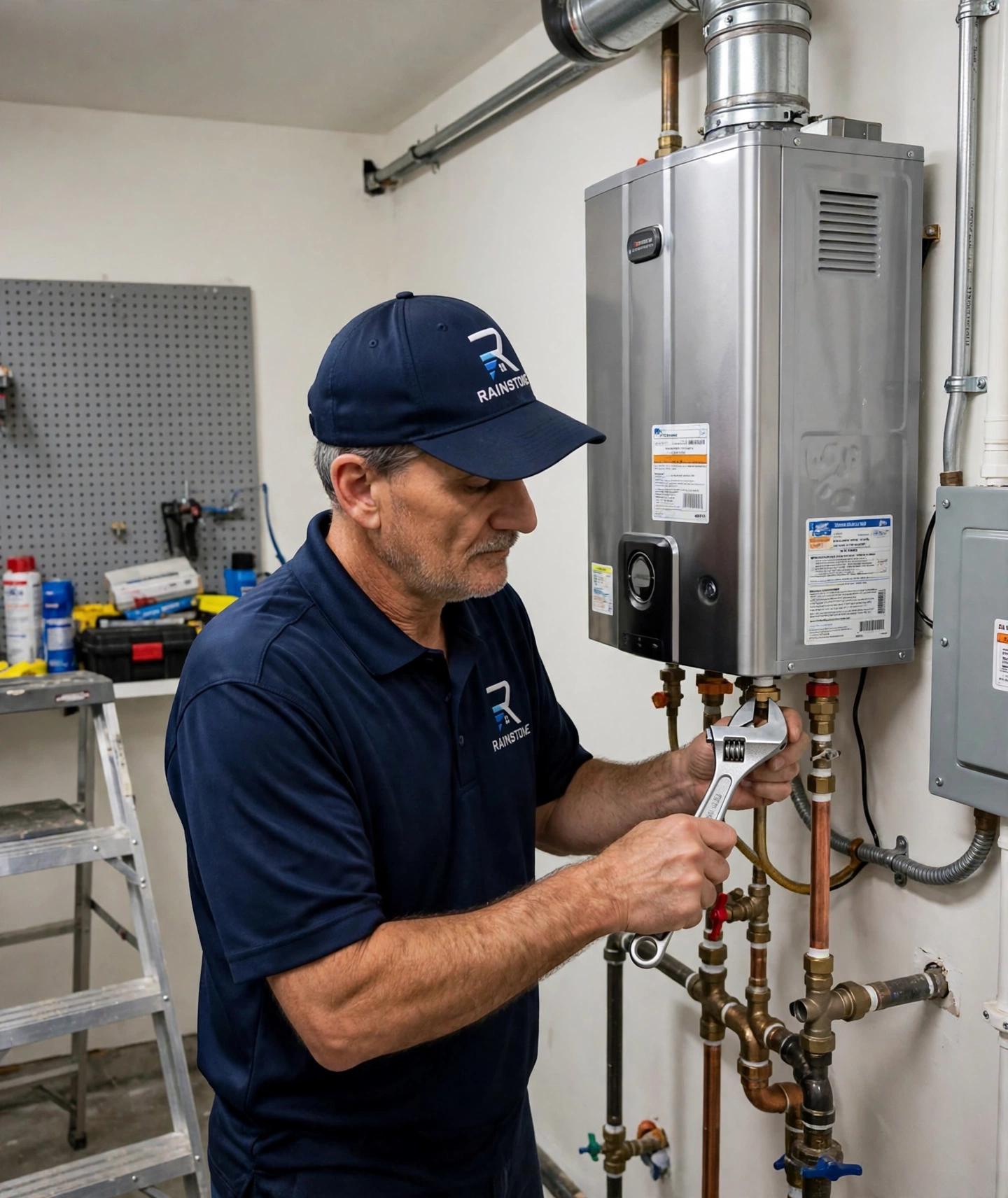
If you have noticed moisture near your water heater, staining on a ceiling below an attic installation, unexplained dampness in a utility closet, or a water bill that is running higher than your usage pattern would explain, do not leave the question unresolved. At Rainstone Water Heaters, we provide professional water heater leak detection across San Antonio, tracing the source of leaks in every installation type and San Antonio property context with the specific knowledge of how the city’s water conditions and architecture shape the leak patterns we find. From the older homes of the city’s established inner neighborhoods to the newest suburban communities extending across Bexar County, we are equipped to find and resolve your water heater leak accurately and efficiently. Call us today at (210) 972-1022 to book a service and get a definitive answer on your San Antonio water heater’s condition.
Leak Detection in San Antonio: the numbers we work by
| Where the water is | What it usually means |
|---|---|
| Pooled under the tank | Tank corrosion or a failed fitting — the unit must be inspected before anyone calls it minor |
| Dripping from the T&P discharge pipe | Pressure or temperature problem — the valve is doing its job and reporting a fault |
| Wet at the top connections | Inlet/outlet fitting or flex-line failure — often repairable if the tank is sound |
| Damp drywall or flooring nearby, unit dry | The leak may be in the line, not the heater — which is why we trace before we quote |
| Detection visit | $125 service call — source identified and written quote for the repair |
How we handle it, step by step
- We start with the water’s story — when it appears, how much, and what changed in the house around the same time.
- We inspect the unit and its connections under pressure, then trace outward along the lines the water could be traveling.
- We separate the source from the symptom. A wet floor is a symptom; the failed fitting two feet away is the source.
- You get the finding and the fix in writing — repair the fitting, or, if the tank itself is weeping, an honest replacement conversation.
For an independent cross-check on the numbers above: the U.S. Department of Energy’s homeowner guidance puts a conventional storage water heater’s service life at roughly 10–15 years and recommends a thermostat setting of 120°F. The lifespan and price figures in our table are the ones Rainstone publishes in its own Texas cost guides — and the ones we stand behind on every written quote.
More water heater services in San Antonio
- Water Heater Repairs in San Antonio
- Water Heater Replacement in San Antonio
- Water Heater Installation in San Antonio
- Tankless Water Heaters in San Antonio
- Water Heater Maintenance in San Antonio
- Water Heater Inspections in San Antonio
- Emergency Water Heater Repairs in San Antonio
- Commercial Water Heaters in San Antonio
See everything we handle in your area — our San Antonio water heater services page covers every repair, replacement, and installation we offer locally.