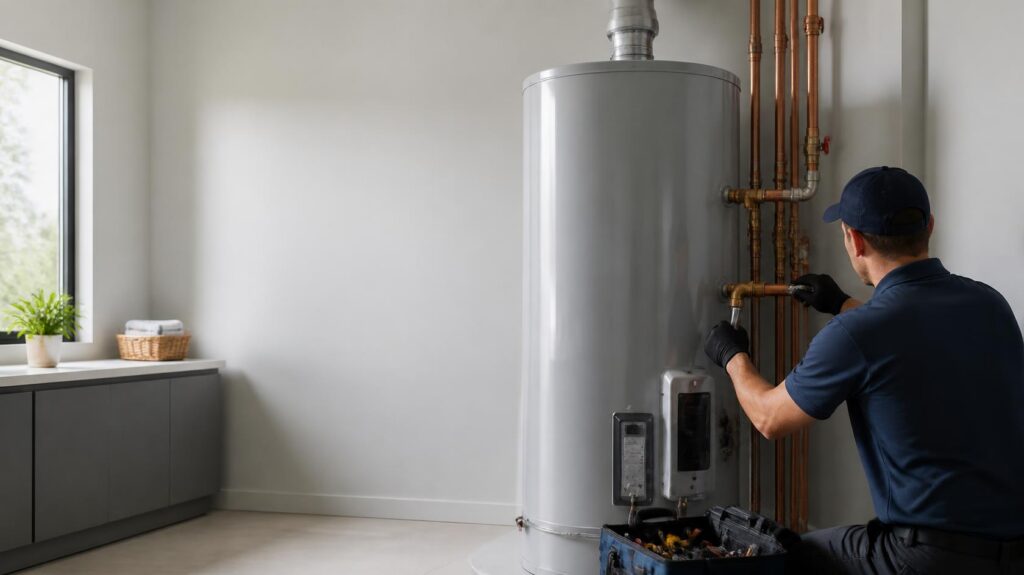
San Antonio’s water supply comes primarily from the Edwards Aquifer, one of the most naturally mineral-rich groundwater systems in the country, and the effects of that water on residential water heaters are visible in virtually every unit our technicians inspect across the city. Whether you own a home in the King William Historic District, a mid-century property in Alamo Heights, or a newer build in the growing suburbs along US-281, your water heater is operating in water conditions that accelerate component wear and make professional inspection a genuinely important part of protecting your investment. At Rainstone Water Heaters, we provide thorough water heater inspections for San Antonio homeowners with a clear understanding of what the city’s specific water and climate conditions mean for your system. Call us today at (210) 972-1022 to book a service and find out exactly where your water heater stands.
An inspection is a small appointment that answers a big question: is this water heater safe, sound, and going to last — or is it a bill waiting for its moment? I am Kurt Pinkerton, Rainstone’s responsible master plumber. Here in San Antonio, my team works out of our San Antonio office, and the standard is the one I set: a $125 service call, a written quote before work begins, and no surprises on the invoice. Call us at 210-972-1022.
What Inspections Commonly Reveal in San Antonio Water Heaters
Kurt’s take: I am a grandfather, and I am bringing my own grandkids into this trade — so I think about the family on the other side of a water heater a little differently than a man who is just selling a job. An inspection is a report, not a sales call — age, condition, code status, and the faults that are coming, stated plainly enough for a buyer, a seller, or an owner to act on. The moment an inspection becomes a funnel for replacements, it stops being worth the paper. San Antonio’s SAWS supply is some of the hardest water in Texas, straight off Edwards limestone — it loads tanks with sediment and coats tankless exchangers faster than almost anywhere we work. That is why every job I sign for starts with a written quote before work begins — no surprises after the fact.
Accelerated Limescale Deposition on Heating Surfaces
One of the most consistent findings our technicians report when inspecting water heaters across San Antonio is a rate of limescale deposition on heating elements and burner surfaces that exceeds what is typical in softer-water Texas cities. San Antonio’s municipal water, delivered by the San Antonio Water System from Edwards Aquifer sources, carries a dissolved mineral load that is among the highest of any major Texas city. When this water is heated inside a water heater, the calcium and magnesium carbonate compounds it contains precipitate out of solution and accumulate on whichever heated surface is closest. In electric units, this means a coating on the submerged heating elements. In gas units, it means a growing layer at the base of the tank directly above the burner, which functions as an increasingly effective insulating blanket between the heat source and the water it is supposed to be heating.
During an inspection, the presence and thickness of this limescale layer can be inferred from several observable indicators: the acoustic signature of the unit during operation, the measured temperature at the hot water outlet compared to the thermostat setting, and the quality and rate of flow from the drain valve during a partial flush. Technicians who are familiar with San Antonio’s water conditions can place these observations in context, distinguishing between a scale layer that represents normal accumulation for the unit’s age and service history and one that indicates a more aggressive mineral load or a maintenance gap that has allowed the problem to compound beyond what would be expected. San Antonio properties are consistently on the higher end of this range, and the inspection findings we document across the city reflect that pattern.
Faster-Than-Average Anode Rod Depletion in High-Calcium Water Conditions
Anode rod condition is one of the most informative findings during any water heater inspection, and in San Antonio it is also one of the most frequently concerning. The high calcium content of Edwards Aquifer water creates conditions in which anode rods composed of standard magnesium deplete at a rate that can be two to three times faster than the same rod would in a softer water supply. A magnesium anode rod that might provide five or six years of effective protection in a low-mineral water supply may be substantially consumed within two years of installation in a San Antonio property on a direct SAWS connection without any water softening equipment in the supply line. When our technicians find an anode rod that has been left in place beyond this shortened effective interval, the tank lining it was protecting has already begun to experience direct corrosive contact with the water, a condition that shortens the unit’s remaining service life considerably.
The inspection finding in these cases goes beyond simply identifying a depleted anode rod. Our technicians also assess the interior tank condition for early signs of corrosion at the surfaces the rod was last protecting, note any rust coloration in the water drawn during the drain flush, and advise the homeowner on the replacement interval that is appropriate for their specific water supply conditions. In San Antonio homes without water softeners, we typically recommend anode rod inspection every twelve to eighteen months rather than the standard manufacturer interval, and we document this recommendation as part of the written inspection summary so that the homeowner has a clear and specific maintenance schedule to follow rather than a generic guidance statement.
Closed Plumbing System Pressure Conditions in SAWS-Supplied Properties
Many San Antonio homes connected to the SAWS distribution network are supplied through a closed plumbing system, meaning that a pressure-reducing valve, check valve, or backflow preventer at the meter prevents expanded water from returning to the main supply line when it is heated inside the water heater. In a closed system, thermal expansion of the water during the heating cycle has nowhere to dissipate, and this can cause a gradual pressure increase within the water heater and the connected plumbing each time the unit fires. Over time, this cycling pressure stress affects the water heater’s pressure relief valve, the fittings at the top of the tank, and any other pressure-sensitive component in the closed loop.
During an inspection of a San Antonio property on a SAWS closed system connection, our technicians assess whether an expansion tank has been installed to accommodate this thermal expansion safely. In properties where no expansion tank is present, the TPR valve bears the entire burden of pressure management and will frequently show signs of periodic activation — a slight mineral staining or calcium deposit below the valve body that indicates it has been opening and reseating repeatedly in response to pressure spikes that occur during the heating cycle. This is not the TPR valve malfunctioning — it is working exactly as designed — but it is a condition that accelerates valve wear and indicates an installation that should be brought into compliance with current plumbing code through the addition of a correctly sized expansion tank.
Sediment Density and How San Antonio’s Water Compares to Other Texas Cities
San Antonio’s water hardness, measured in grains per gallon, is consistently higher than the Texas state average and notably higher than the water supplied to cities such as Houston and Austin that draw from different source types. This means that the volume and density of sediment that accumulates at the base of a water heater tank in San Antonio is typically greater, at any given age, than would be found in the same unit operated in a softer-water Texas city. Inspections of ten-year-old units in San Antonio frequently reveal sediment conditions that would be more consistent with fifteen-year-old units in lower-hardness environments, and this observation forms an important part of how our technicians communicate the urgency of maintenance and replacement decisions to San Antonio homeowners.
The sediment layer that builds inside a San Antonio water heater is also typically denser and harder than the loose, granular sediment seen in other Texas cities, because the high calcium carbonate concentration causes the deposited scale to solidify into a concrete-like mass rather than remaining as loose particles that can be fully removed through a standard drain flush. This hardened sediment layer is more difficult to remove and more damaging to the tank base over time, and in older San Antonio units it can prevent effective flushing even when the procedure is carried out correctly. Our inspection findings in these cases include an assessment of whether the sediment layer is still manageable or whether it has reached a point where the unit’s efficiency and longevity are irreversibly compromised, informing the homeowner’s replacement decision with specific, observable evidence rather than a general recommendation.
Gas Appliance Combustion Findings in San Antonio’s Summer Humidity Conditions
Gas-powered water heaters in San Antonio operate in a climate that combines high summer temperatures with elevated humidity levels during the monsoon-influenced months of late summer, creating conditions that can affect combustion air quality and flue venting performance. Humid air that enters a gas water heater’s combustion chamber carries more moisture than the dry air the unit was calibrated for, and in units with marginal or compromised flue venting, this additional moisture content can contribute to condensation inside the flue pipe during cool start-up conditions. Over time, this condensation promotes corrosion within the flue pipe itself, particularly at seams and joints, and can eventually compromise the integrity of the venting system in ways that create a carbon monoxide risk if left unaddressed.
Our inspection of gas units in San Antonio includes a specific assessment of the flue condition and the combustion air supply, checking for signs of flue corrosion, inadequate combustion air opening sizing, and any blockages that might restrict the exhaust pathway. In San Antonio’s densely built older neighborhoods, where homes are positioned close together and utility spaces are compact, flue routing can be more complex than in newer suburban builds, and the inspection of these systems requires familiarity with the specific venting configurations common to San Antonio’s residential building styles. Our technicians bring this localized experience to every gas unit inspection we carry out across the city.
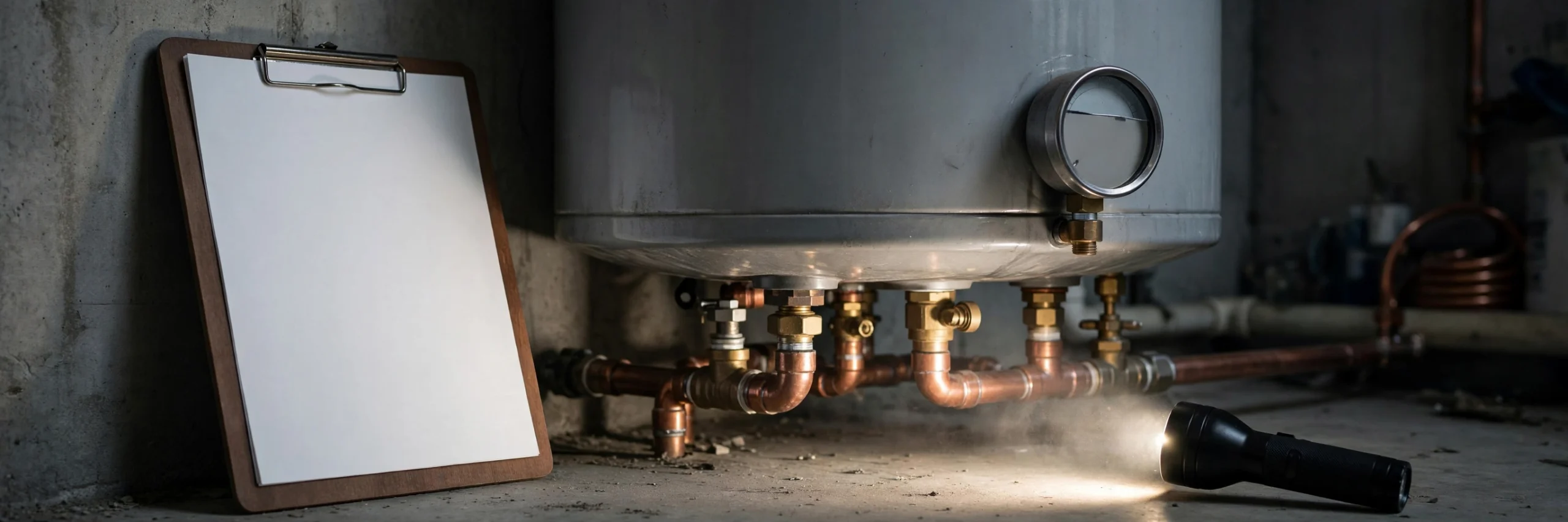
The Edwards Aquifer as San Antonio’s Water Source and Its Significance for Water Heaters
Kurt’s take: Here is what 38 years teaches a man: the expensive failures almost always start as cheap ones somebody decided to ignore. The faults that matter most are the quiet ones: a weeping relief valve, a swollen anode, corrosion starting at a fitting. Catching those on an inspection is the cheapest sentence in plumbing — catching them after the fact is a different invoice entirely. That is the standard our San Antonio office works to, from the historic districts to the newest subdivisions on the edges. It is also why our $125 service call is waived in full when you go ahead with any replacement — a diagnosis should never feel like a trap. — Kurt Pinkerton, Responsible Master Plumber, Lic. # M-21546
Why the Edwards Aquifer Produces Some of Texas’s Hardest Municipal Water
San Antonio draws its municipal water supply primarily from the Edwards Aquifer, one of the most productive artesian aquifer systems in the world, and a source whose water chemistry is shaped by the geology of the Edwards Limestone formation through which it travels. The Edwards Limestone is composed primarily of calcium and magnesium carbonates, and as water moves through this formation, it dissolves and carries these compounds, emerging at the aquifer’s springs and well heads with a mineral content that classifies it as hard to very hard by standard water quality measures. According to the Edwards Aquifer Authority, which manages and monitors the aquifer system, the aquifer supplies a large proportion of the population in the San Antonio region and underpins the water supply of one of the fastest-growing major cities in the United States. For the residential water heaters that process this water daily, the practical consequence of the aquifer’s geology is a mineral loading that sets San Antonio apart from cities supplied by surface water sources such as reservoirs or river intakes, which typically carry lower dissolved mineral concentrations.
The water hardness delivered to San Antonio homes through the SAWS distribution network varies somewhat by zone and season, but is consistently in a range that accelerates scale formation in water heating equipment at a rate that makes the city a particularly demanding environment for water heaters of all types. Homeowners who move to San Antonio from cities with softer water supplies often notice the effects on their plumbing fixtures, kettle scale, and soap lathering behavior within weeks, and while these surface-level changes are noticeable, the effects accumulating inside their water heater are less visible but ultimately more costly if not managed through regular professional attention.
How Edwards Aquifer Water Chemistry Affects Specific Internal Components
The calcium carbonate chemistry of Edwards Aquifer water interacts with the internal components of a water heater in a sequence of effects that is well understood by our technicians and consistently visible in the units we inspect across San Antonio. The first effect is the formation of a thin but growing limescale layer on the heating element surfaces in electric units, or on the base of the tank above the burner in gas units, as calcium carbonate precipitates out of solution each time the water temperature rises during a heating cycle. This layer grows incrementally with each cycle, and over a period of years, it can reach a thickness that meaningfully degrades heating efficiency and forces the unit to work harder to achieve the same output temperature.
The second effect involves the anode rod, whose corrosion is driven partly by the electrochemical potential between the rod material and the steel tank, but which is also influenced by the concentration of dissolved minerals in the surrounding water. High-mineral water creates a more electrochemically active environment that accelerates the consumption of the anode rod material, shortening the rod’s protective life and requiring more frequent replacement than would be necessary in a lower-mineral supply. The third effect is the buildup of scale inside pipe connections, at the inlet and outlet nipples, and on the internal surfaces of valves and fittings, which increases flow resistance and can cause the progressive narrowing of the water passages that eventually results in reduced pressure at the taps and appliances served by the hot water system.
Water Softening in San Antonio Homes and Its Effect on Anode Rod Material Choices
A significant proportion of San Antonio homeowners have installed whole-home water softeners to manage the effects of the Edwards Aquifer’s high mineral content on their plumbing fixtures, appliances, and water heating equipment. Water softeners work by exchanging the calcium and magnesium ions in the water for sodium ions through an ion exchange resin, producing water that is chemically softer but that carries a higher sodium content than the unsoftened supply. For most purposes, this is an effective solution that protects fixtures and extends appliance life, but it introduces a specific consideration for water heater anode rods that not all homeowners or even all plumbers are aware of.
Softened water is more corrosive to steel surfaces than the hard water it replaces, because the sodium ions it carries are more aggressive in attacking the tank lining than the calcium and magnesium ions they replaced. In a softened-water environment, the anode rod must work harder to protect the tank, and standard magnesium anode rods in particular can deplete very rapidly in highly softened water. The recommended response is to replace a magnesium anode rod with an aluminum-zinc composite rod in any water heater serving a property with an active whole-home water softener. This material choice provides effective corrosion protection in softened water conditions without the accelerated depletion that a magnesium rod would experience. Our technicians identify softened water installations during their pre-inspection assessment and advise on the appropriate anode rod material as part of every inspection visit to San Antonio properties.
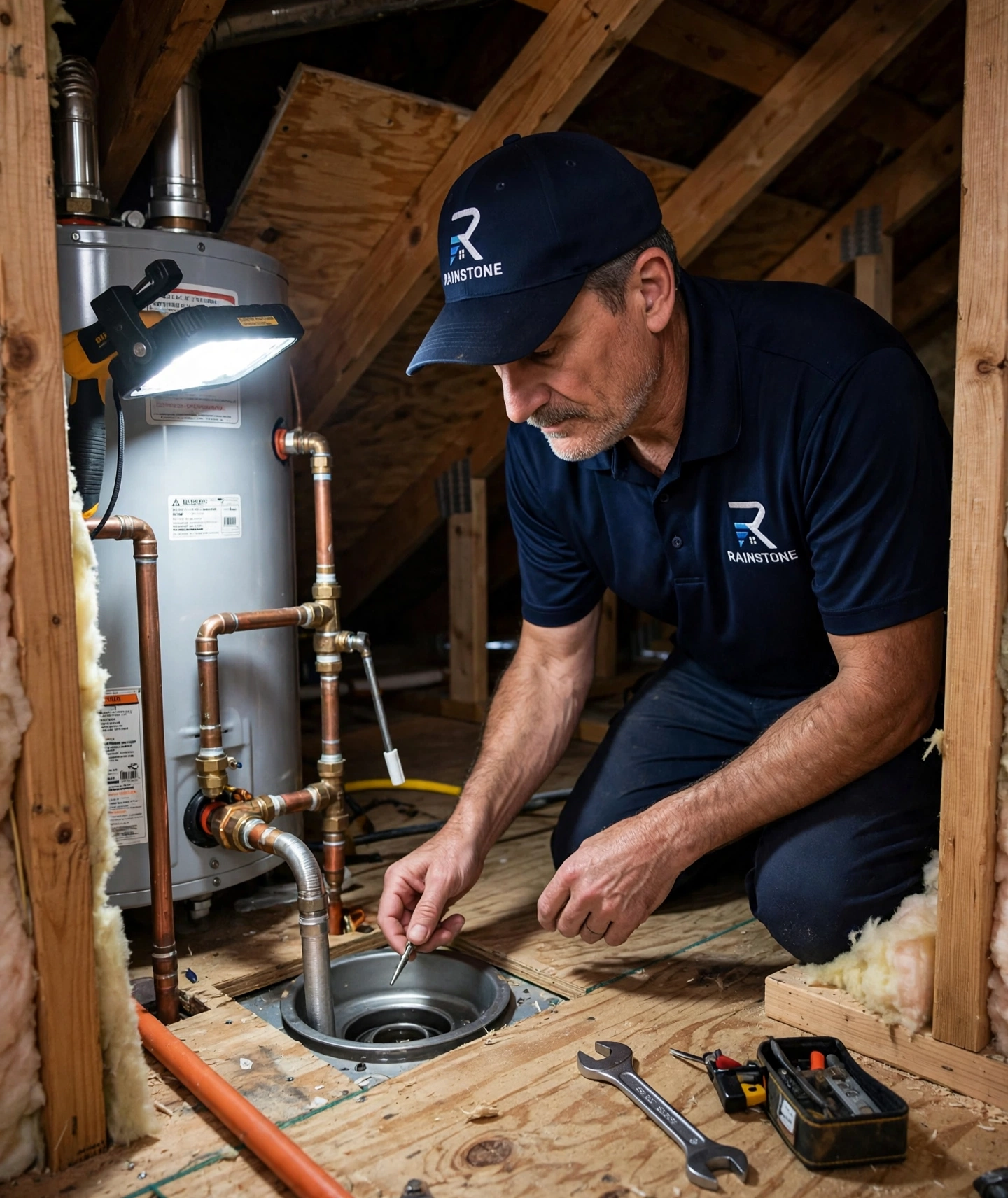
Inspection Priorities for San Antonio’s Diverse Residential Property Stock
Historic Homes in San Antonio’s Inner-City Neighborhoods and Their Specific Inspection Needs
San Antonio’s inner-city neighborhoods, including the King William Historic District, Monte Vista, Mahncke Park, and Southtown, contain a substantial concentration of residential properties built between the late nineteenth century and the mid-twentieth century, many of which have undergone multiple rounds of partial renovation without a comprehensive update of their water heating and plumbing infrastructure. These properties present a distinctive set of inspection challenges that differ from both newer construction and from the typical mid-century suburban home. Original or early-replacement galvanized steel supply pipes, undersized water heater installation spaces, and non-standard flue configurations are all conditions that our technicians encounter in these neighborhoods and that require specific expertise to assess correctly.
In some historic San Antonio properties, the water heater has been installed in a location that does not fully comply with current code requirements — perhaps in a closet without adequate combustion air opening, or in a space where the flue routing requires multiple bends that exceed current standards for total equivalent length. These conditions may have existed for years without incident, but they represent latent safety issues that a thorough inspection should identify and communicate to the homeowner, along with realistic guidance on what remediation would involve. Our team is experienced in assessing these older installation environments without the bias toward immediate condemnation that can make inspection findings unhelpful to homeowners who are managing properties with real historical and architectural constraints.
First-Inspection Timing for New Builds in San Antonio’s Expanding Suburbs
San Antonio’s suburban growth corridor, extending along US-281 to the north, along US-90 to the west, and through communities such as Converse, Universal City, Schertz, and Helotes, has produced a large volume of new residential construction over the past decade, and many of these homes contain water heaters that have never been professionally inspected since their installation at the time of construction. The assumption that a new water heater in a new home requires no attention is understandable but incorrect. Construction-phase water heater installations occur in conditions that can introduce debris into the tank or connections, and the initial fill of a new plumbing system can carry sediment particles and flux residue from the soldering of copper joints into the water heater’s interior.
A first professional inspection at twelve to eighteen months after move-in allows our technicians to flush any construction-phase debris from the tank, verify that all components are functioning correctly after their first months of operation, and establish a documented baseline of the unit’s condition that will be useful for comparison at future maintenance visits. In San Antonio’s suburban growth areas, where the Edwards Aquifer water supply begins attacking water heater components from the first day of operation, establishing this baseline early and beginning a structured maintenance schedule from the first inspection gives new homeowners the best possible start in protecting their water heater investment and avoiding the premature failures that inadequate early attention can produce.
Schedule Your Water Heater Inspection in San Antonio With Rainstone Water Heaters Today
Whether your San Antonio home is a historic property in the inner city, a mid-century house in an established neighborhood, or a recently completed build in the suburbs, your water heater is operating in water conditions that make professional inspection one of the most valuable maintenance investments you can make. At Rainstone Water Heaters, we bring a clear, localized understanding of how Edwards Aquifer water conditions affect water heaters across San Antonio, and our inspections go beyond a generic checklist to provide findings and recommendations that are genuinely specific to your property, your unit, and the water it processes every day. Call us today at (210) 972-1022 to book a service and get an honest, thorough assessment of your San Antonio water heater’s current condition.
Water Heater Inspections in San Antonio: the numbers we work by
| What we check | Why it matters |
|---|---|
| Tank condition and age (from the serial label) | Most tanks live 8–12 years; knowing where yours sits changes every other decision |
| T&P relief valve | The safety device of last resort — it must open, and it must discharge somewhere safe |
| Venting and combustion (gas units) | Poor draft is a carbon monoxide risk, not a comfort issue |
| Anode rod, fittings, and shut-offs | The cheap parts whose failure becomes the expensive damage |
| The inspection itself | Booked as a $125 service call — findings in plain language, quote in writing if anything needs work |
How we handle it, step by step
- We read the unit’s history — age from the serial label, service stickers, and the condition of everything connected to it.
- We test the safety devices — T&P valve function and gas venting draft on combustion units.
- We hunt the quiet problems — anode depletion, fitting corrosion, sediment load, and slow leaks.
- You get the findings straight — what is fine, what to watch, and what to fix, with written pricing for anything we recommend.
For an independent cross-check on the numbers above: the U.S. Department of Energy’s homeowner guidance puts a conventional storage water heater’s service life at roughly 10–15 years and recommends a thermostat setting of 120°F. The lifespan and price figures in our table are the ones Rainstone publishes in its own Texas cost guides — and the ones we stand behind on every written quote.
More water heater services in San Antonio
- Water Heater Repairs in San Antonio
- Water Heater Replacement in San Antonio
- Water Heater Installation in San Antonio
- Tankless Water Heaters in San Antonio
- Water Heater Maintenance in San Antonio
- Emergency Water Heater Repairs in San Antonio
- Leak Detection in San Antonio
- Commercial Water Heaters in San Antonio
Explore all of our San Antonio water heater services to see how the local team can help with your home’s hot water.