Most water heater problems do not appear without warning — they develop gradually over months or years as components wear, mineral deposits accumulate, and small issues go unnoticed. Routine professional maintenance is the most effective way to stay ahead of these developments, extending the useful life of your unit, protecting its energy efficiency, and avoiding the cost and disruption of avoidable breakdowns. At Rainstone Water Heaters, we provide scheduled maintenance services for water heaters of all types across Texas, keeping residential and commercial systems in reliable working order year after year. Whether your unit is a standard tank, a tankless system, or a commercial-grade unit, our maintenance team is ready to help. Call (817) 580-8562 today to book a service and arrange annual maintenance for your Texas property.
Maintenance is the least exciting page on this website and the one that saves homeowners the most money. I am Kurt Pinkerton, Rainstone’s responsible master plumber, and I will put it plainly: most of the emergency calls we run are maintenance that never happened. Across Texas, that means the same standard in every driveway: a $125 service call, a written quote, and work I am willing to sign my name to. Call us at 817-580-8562 and you will get exactly that.
Annual Maintenance Tasks That Keep Your Texas Water Heater Performing at Its Best
Tank Flushing to Remove Sediment Accumulation
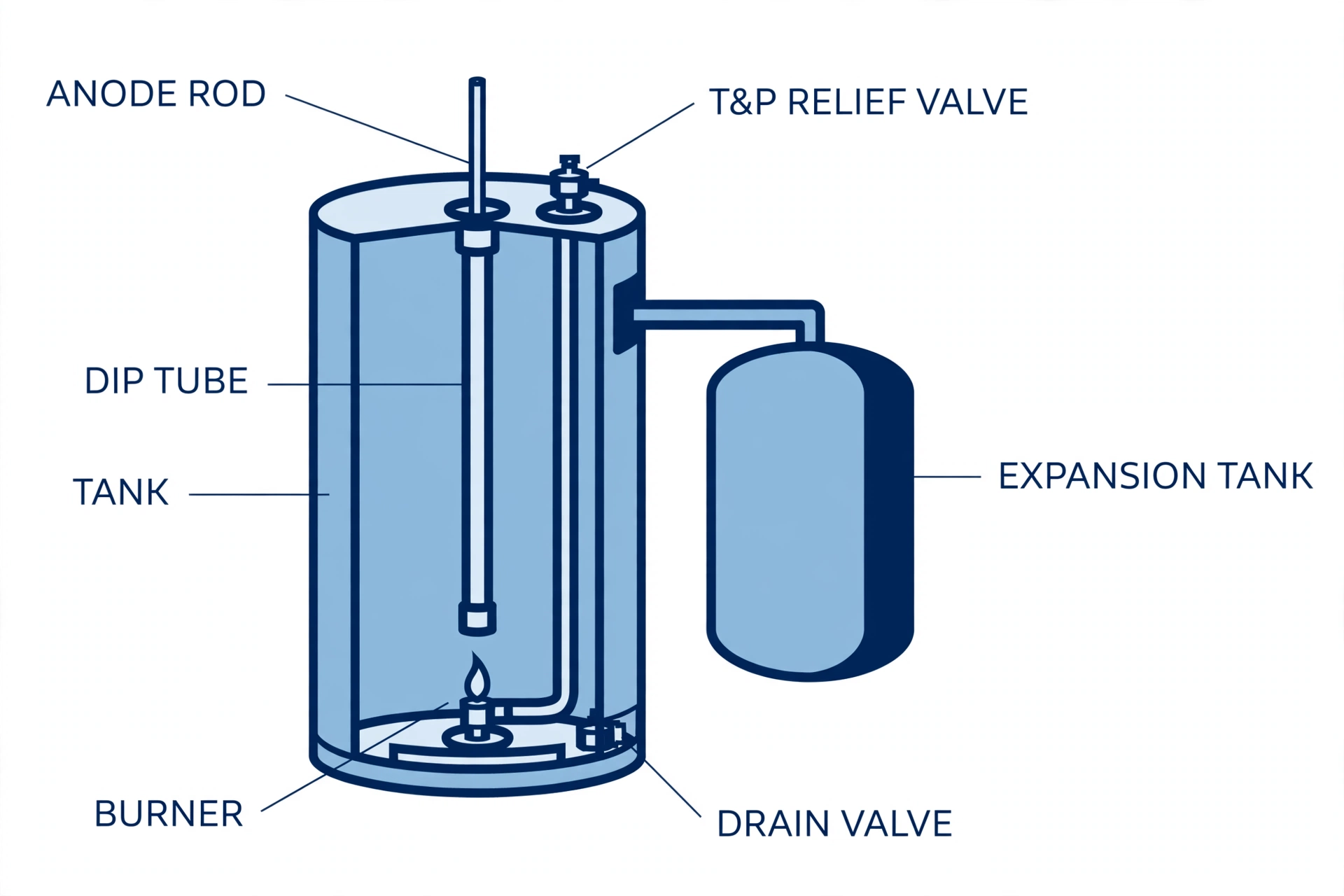
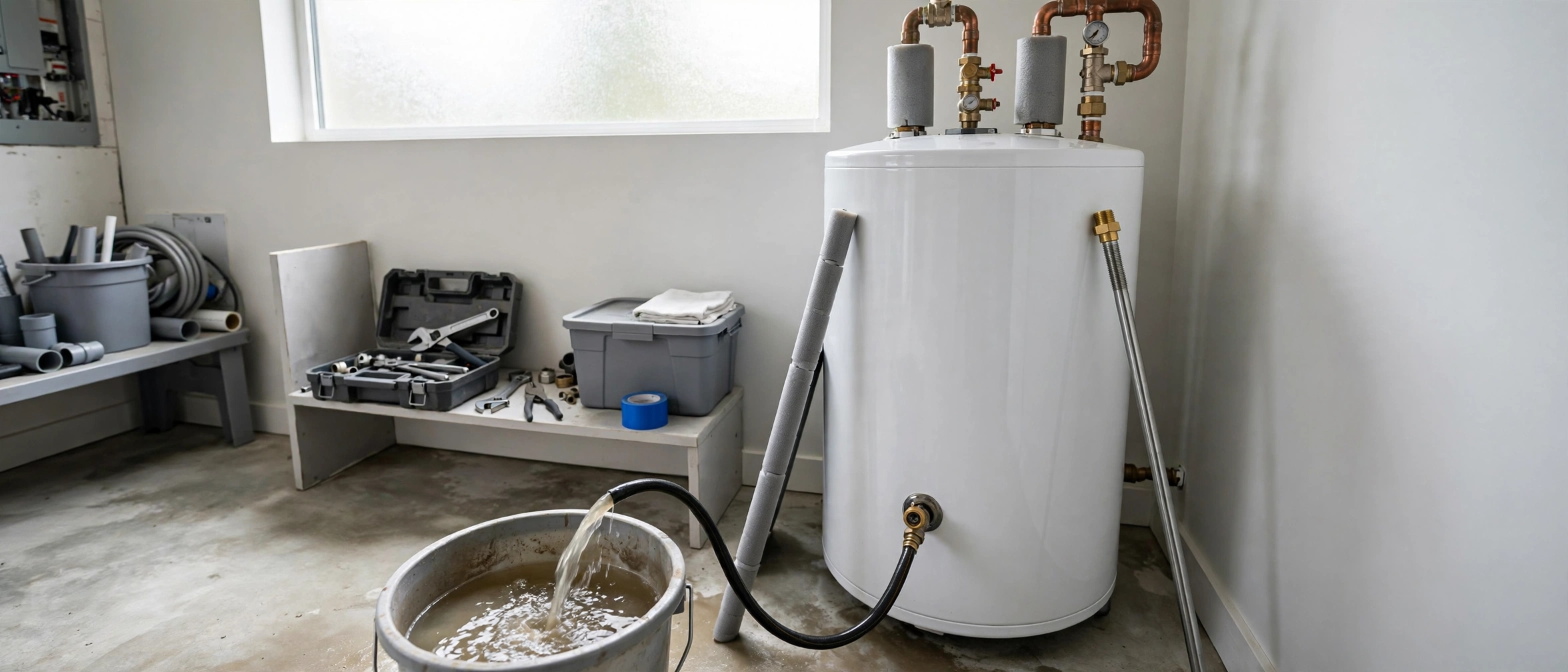
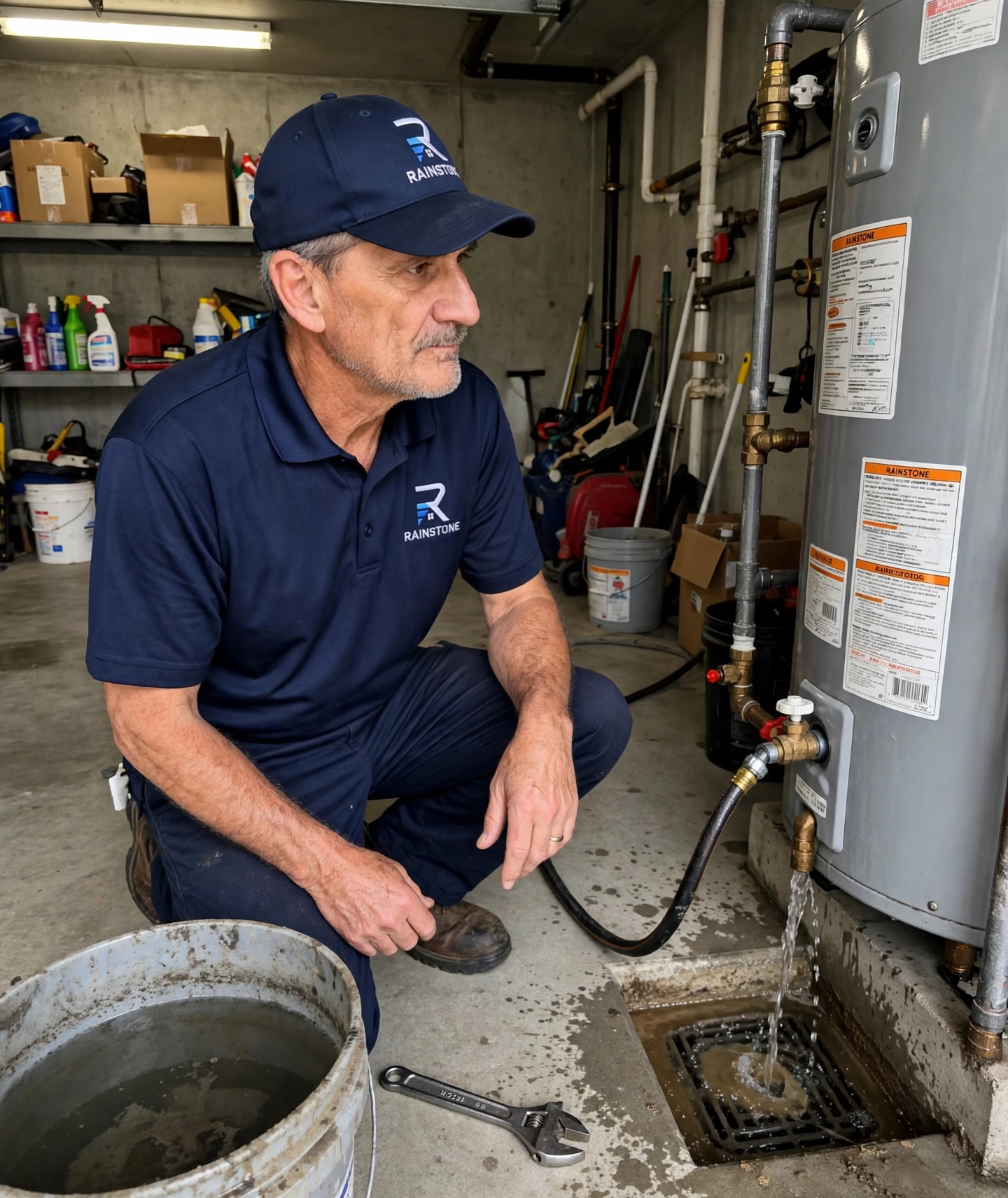
One of the single most impactful maintenance tasks for any storage-tank water heater in Texas is an annual sediment flush. Over the course of a year, calcium and magnesium compounds from the water supply settle and harden at the base of the tank, forming a progressively thicker layer that insulates the heating source from the water above it and forces the unit to run longer and hotter to achieve the same output temperature. Flushing the tank involves connecting a hose to the drain valve at the base of the unit and allowing the water and accumulated sediment to discharge until the outflow runs clear, restoring direct contact between the heating element or burner flame and the water volume inside the tank. In Texas, where water hardness levels in many communities make sediment a particularly fast-accumulating problem, this procedure should be treated as a non-negotiable annual service task rather than an optional extra.
The volume and consistency of the sediment that exits the unit during a flush gives our technicians a useful indication of how aggressively the mineral content of the local water supply is affecting the unit. In high-hardness areas of Central and West Texas, the discharge can contain a significant quantity of dense, sand-like sediment within the first year of operation following the previous flush. In less extreme water supply areas in East Texas, the buildup is typically slower. Regardless of the rate, allowing sediment to remain in the tank long-term creates conditions that accelerate heating element failure, promote internal corrosion at the tank base, and reduce the overall thermal efficiency of the unit in ways that progressively inflate the homeowner’s energy costs over time.
Anode Rod Inspection and Replacement
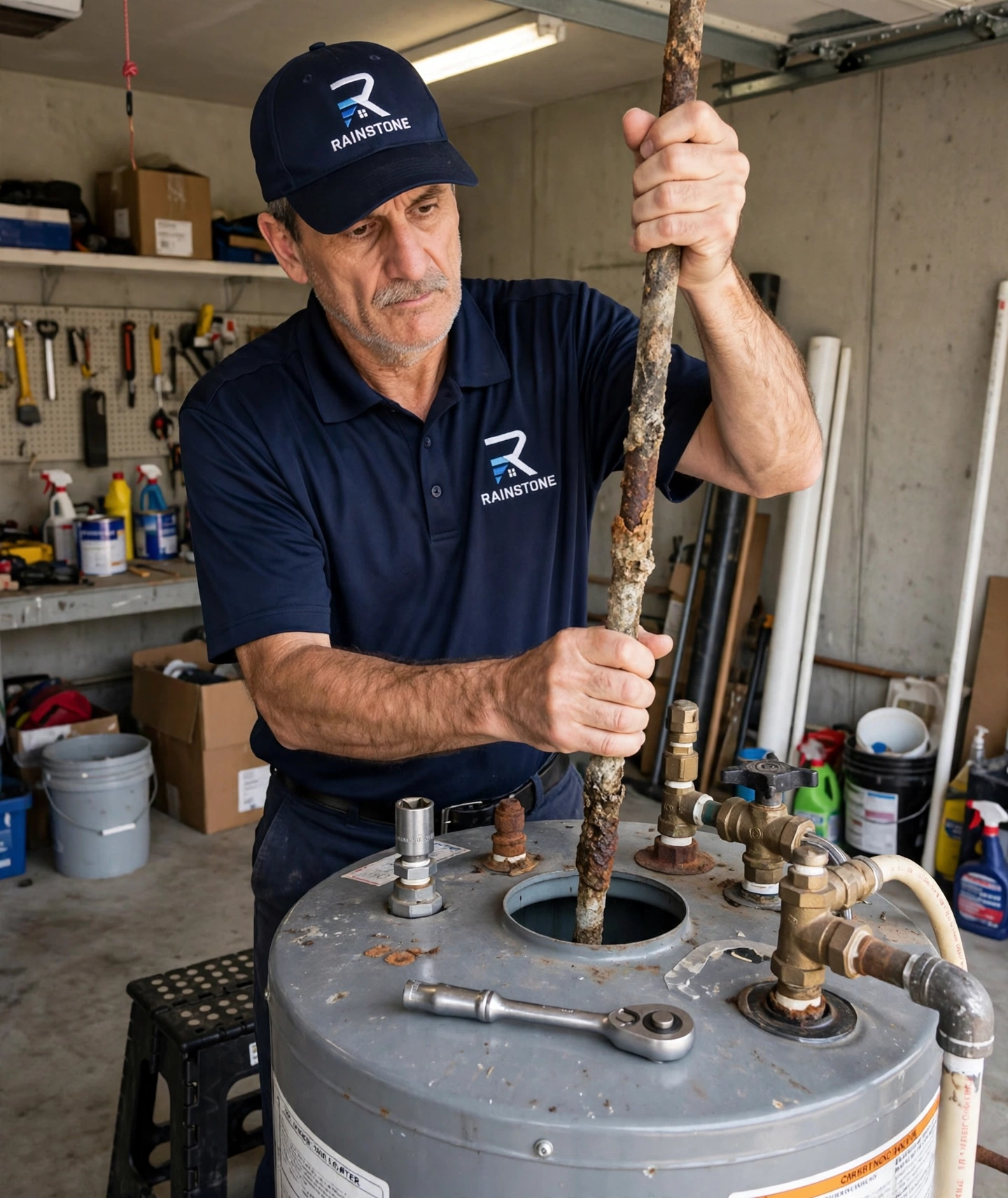
Annual maintenance visits from Rainstone Water Heaters include a thorough assessment of the anode rod’s remaining service life. As described by its design function, the anode rod is intended to sacrifice itself to corrosion so that the steel tank walls remain protected, but once the rod has been consumed to the point where little sacrificial metal remains, that protection ends. Checking the rod annually and replacing it as needed, rather than waiting for the standard three-to-five year guideline that was established for less aggressive water supplies, is one of the most cost-effective maintenance practices for Texas homeowners facing hard water conditions.
The material of the anode rod itself can also be adjusted during a maintenance visit to better suit the specific characteristics of the local water supply. Standard magnesium anode rods are effective in most Texas supply conditions but can react with sulfur-bearing well water to produce an unpleasant odor in the hot water supply. In these cases, our technicians can replace the magnesium rod with an aluminum-zinc composite rod that provides the same corrosion protection without the odor-producing chemical reaction. Tailoring the anode rod material to the water chemistry of the property is a refinement that only becomes possible through professional annual maintenance visits rather than a set-and-forget approach to water heater care.
Pressure Relief Valve Inspection and Functional Test
The temperature and pressure relief valve on every storage-tank water heater must be inspected and functionally tested as part of each annual maintenance service. A TPR valve that has never been tested is an unknown safety variable, and in Texas properties where hard water mineral deposits can cause the valve seat to scale over and prevent proper operation, an untested valve may be functionally inert even though it appears intact from the outside. Our technicians lift the valve lever briefly to confirm it opens freely and reseats cleanly, checking for any signs of mineral scaling, corrosion, or leakage around the valve body that would indicate it needs replacement.
Where a TPR valve is found to be corroded, weeping, or showing signs of a failed seal, replacement is carried out on the same visit as the maintenance service, using a correctly rated valve matched to the unit’s specific working pressure and temperature specifications. Homeowners sometimes assume that because water is coming out of the relief valve discharge pipe, the valve is working correctly, but a valve that leaks continuously is one that has either been triggered and failed to reseat or is no longer sealing against normal operating pressure. Both conditions require immediate replacement rather than monitoring, and annual maintenance provides the structured opportunity to identify this before a safety risk develops.
Kurt’s take: Maintenance is diagnosis done early, while it is still cheap — the first habit I drill into every apprentice I train. A flush, an anode check, and a relief-valve test tell you the truth about a tank years before it leaks. — Kurt Pinkerton, Responsible Master Plumber, Lic. # M-21546
How Texas Mineral-Rich Water Accelerates Wear Without Consistent Upkeep
The Compounding Effect of Deferred Maintenance on Unit Longevity
In most parts of Texas, the mineral content of the municipal and groundwater supply creates a baseline level of wear on water heating equipment that, when compounded over several years of missed maintenance, can shorten a unit’s service life by three to five years or more compared to a well-maintained unit operating in the same water conditions. Each year that sediment is not flushed, the layer at the tank base becomes denser and more difficult to fully remove when maintenance is eventually carried out. Each year that the anode rod goes unchecked, the period of unprotected tank exposure grows. Each year that the TPR valve goes untested, the probability that it has scaled over and lost functionality increases. These are not independent variables but interconnected deterioration pathways that reinforce each other when they are allowed to progress simultaneously.
Texas homeowners who have deferred water heater maintenance for several consecutive years often find when they eventually book a service that the unit requires multiple interventions at once, at a combined cost that considerably exceeds what annual incremental maintenance would have totaled over the same period. The more significant cost, however, is often the accelerated depreciation of the unit itself, which may now require replacement years before it would have needed it under a consistent maintenance regime. Establishing and maintaining an annual service schedule with us is the most financially sound approach for any Texas property owner who wants to get the maximum value from their water heating equipment.
Maintenance Needs for Tankless Water Heaters in Texas Hard Water Areas
Tankless water heaters require a different but equally important maintenance routine compared to storage tank units. The most critical maintenance task for a tankless unit in Texas is periodic descaling of the heat exchanger, which involves circulating a descaling solution through the unit to dissolve the limescale deposits that accumulate on the internal heat exchange surfaces over time. In areas of Texas with high water hardness, the accumulation rate on tankless heat exchangers can be rapid enough to noticeably reduce flow rate and output efficiency within twelve to eighteen months of the last descaling service, making annual or biannual descaling a practical necessity rather than a precautionary measure for many Texas properties.
In addition to heat exchanger descaling, tankless unit maintenance includes cleaning the inlet filter screen, which traps particles from the water supply before they enter the unit, and inspecting the venting system and gas connections on gas-powered models. Properties located in parts of Texas that source water from the Edwards Aquifer, the Ogallala Aquifer, or other limestone-formation groundwater systems are particularly likely to experience accelerated scale buildup in their tankless units and should plan for more frequent descaling intervals than the manufacturer’s standard recommendation. Our technicians assess the actual scale condition of the heat exchanger during each maintenance visit and advise on the appropriate interval for the next service based on what they find, rather than applying a one-size-fits-all schedule that may not reflect the specific water conditions at each property.
Keep Your Texas Water Heater Running Efficiently With Rainstone Water Heaters
Consistent, professional maintenance is the most reliable way to protect your investment in a water heater and ensure it continues to deliver the efficiency and performance your household depends on. At Rainstone Water Heaters, we carry out thorough, professionally executed maintenance services for all water heater types across Texas, from the Gulf Coast and Central Texas to the Dallas-Fort Worth region and beyond. We tailor our maintenance recommendations to the specific water supply conditions, unit type, and usage patterns at each property we service, giving you maintenance that is genuinely suited to your home rather than a generic checklist. Call us today at (817) 580-8562 to book a service and set up a maintenance schedule that keeps your water heater performing its best for years to come.
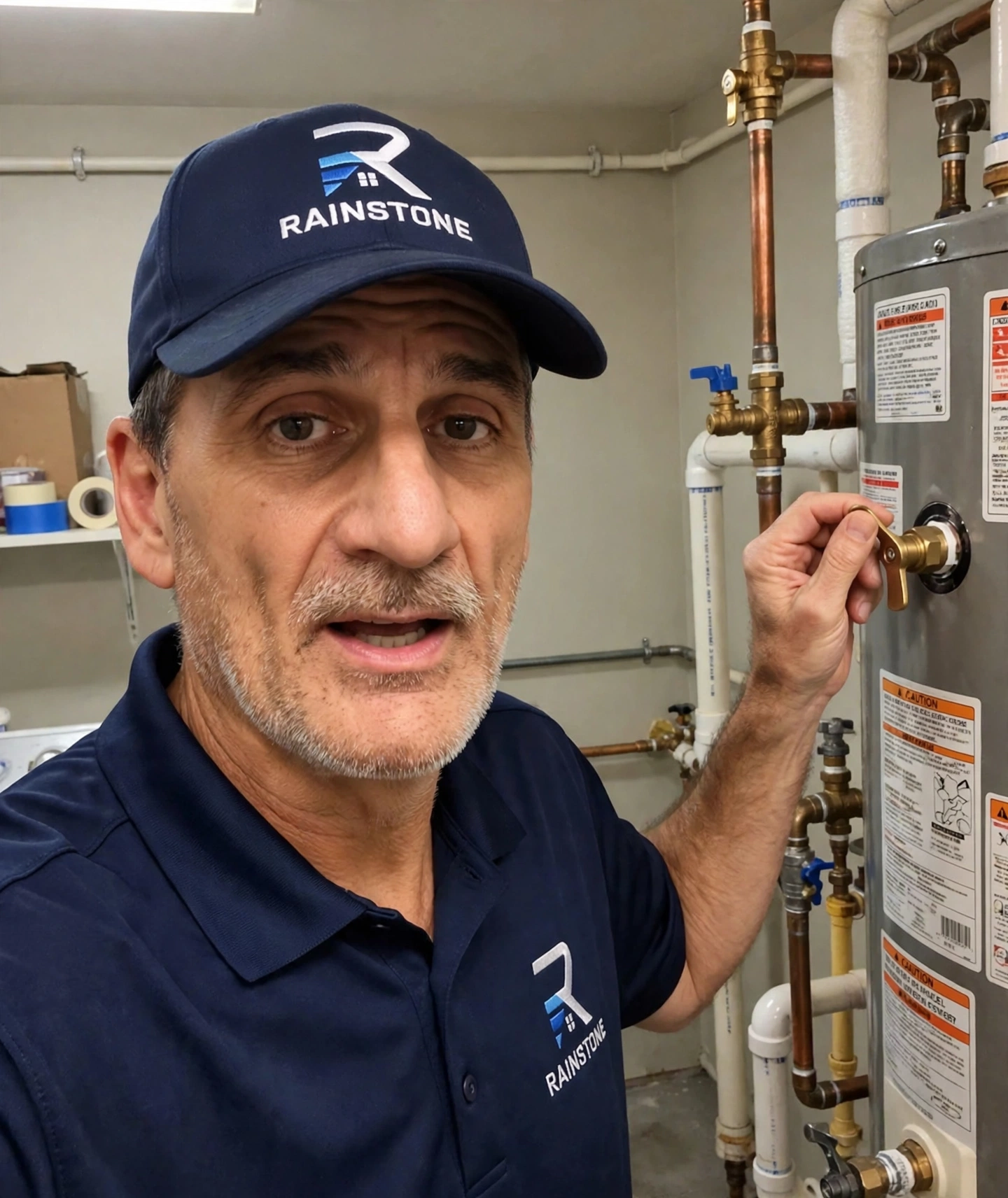

Water Heater Maintenance in Texas: what we check, every visit
How we handle it, step by step
- We flush the tank and clear the sediment that makes a unit rumble, overheat its bottom, and die early.
- We inspect the anode rod — the sacrificial part that rusts so your tank does not. Replaced in time, it is cheap. Ignored, the tank becomes the anode.
- We test the T&P valve and check every fitting for the slow leaks that rot subfloors quietly.
- We check the burner or elements and the venting, and leave you a plain-language condition report.
I have trained more than 25 people from their first day holding a wrench all the way to Journeyman, and the first thing I teach every one of them is that a diagnosis you cannot explain to the homeowner is not a diagnosis at all.
My honest take on maintenance: the math only works if you actually do the work. A tank flushed once a year, and a tankless unit descaled once a year, is the cheapest insurance in plumbing — and that annual visit is when the anode rod, the T&P valve, and every fitting get checked before one of them can fail quietly. Keep the rhythm every year and the unit pays you back in years.
For an independent cross-check on the numbers above: the U.S. Department of Energy’s homeowner guidance puts a conventional storage water heater’s service life at roughly 10–15 years and recommends a thermostat setting of 120°F. The lifespan and price figures in our table are the ones Rainstone publishes in its own Texas cost guides — and the ones we stand behind on every written quote.
Ready when you are — call 817-580-8562 any day from 5 AM to 11 PM, and we will take it from there. — Kurt Pinkerton, Responsible Master Plumber, Lic. # M-21546
Water Heater Maintenance in your city:
- Water Heater Maintenance in Garland
- Water Heater Maintenance in Round Rock
- Water Heater Maintenance in San Antonio