
When it comes to keeping your home’s hot water supply safe, reliable, and energy-efficient, regular water heater inspections are one of the most important maintenance steps a Texas property owner can take. At Rainstone Water Heaters, we provide thorough, professional water heater inspections for homeowners and property managers across the state. From the heat of the Gulf Coast to the dry plains of West Texas, our experienced technicians understand how the state’s varied climate and water conditions affect water heater performance and lifespan. Whether you are concerned about rising energy bills, unusual sounds from your tank, or simply want to schedule a routine check, call our team today at (817) 580-8562 to book a service and ensure your water heater is operating at its best.
An inspection is a small appointment that answers a big question: is this water heater safe, sound, and going to last — or is it a bill waiting for its moment? I am Kurt Pinkerton, Rainstone’s responsible master plumber. Across Texas, that means the same standard in every driveway: a $125 service call, a written quote, and work I am willing to sign my name to. Call us at 817-580-8562 and you will get exactly that.
What a Professional Water Heater Inspection Covers
Visual Assessment of the Unit and Surrounding Area
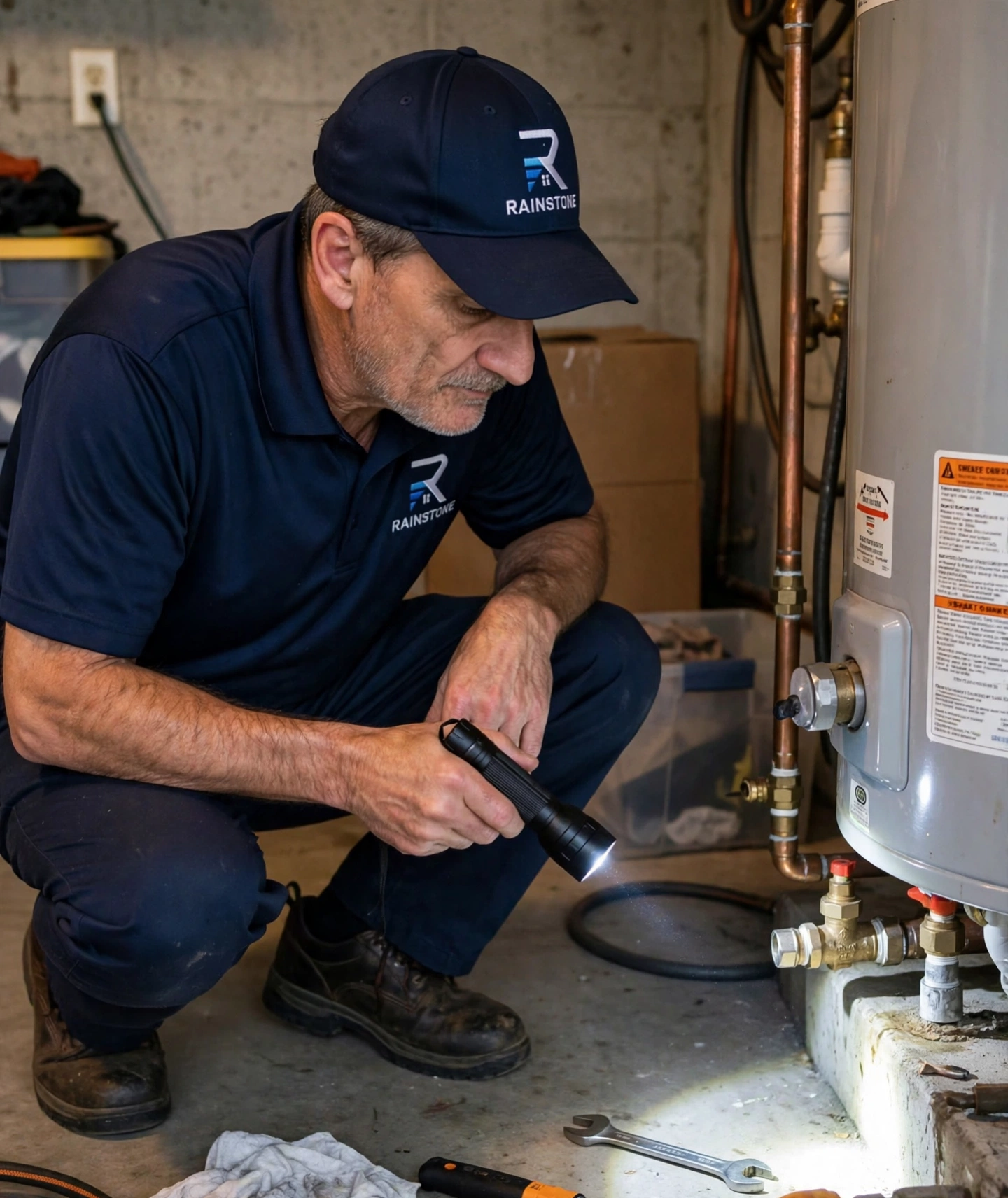
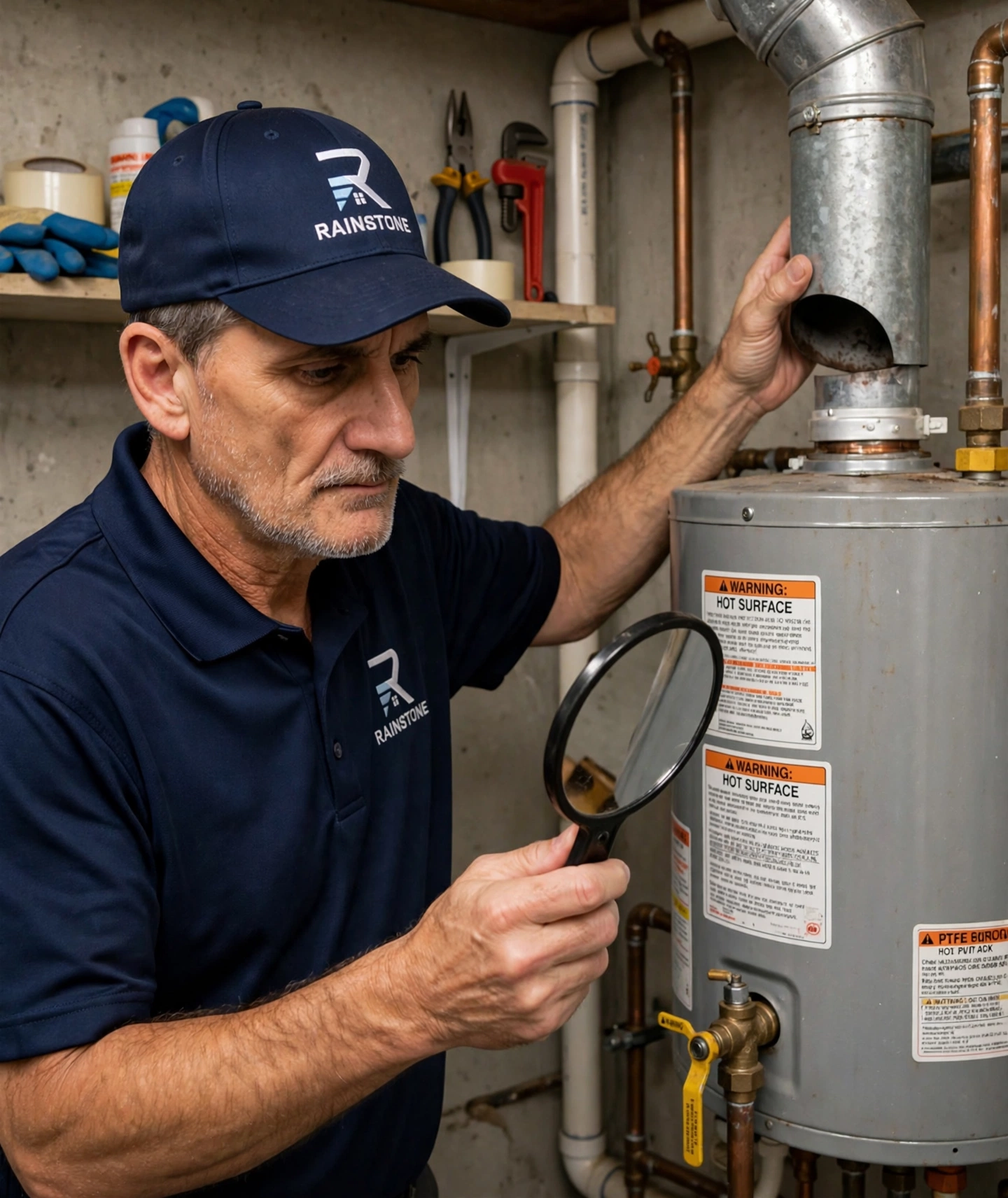
A professional water heater inspection begins with a thorough visual examination of the unit and the space in which it is installed. Our technicians look for external signs of corrosion, rust, mineral deposits, or physical damage to the tank shell, fittings, and connections. They also assess the condition of the installation environment, checking whether the unit is correctly positioned, properly ventilated, and situated in an area free from combustible materials or obstructions. In older Texas properties that may still contain units installed fifteen or more years ago, this external assessment alone can reveal significant safety concerns that the homeowner has not yet noticed. A careful visual review provides our team with a clear starting baseline before proceeding to the more technical components of the inspection process.
Beyond the exterior of the tank, the surrounding plumbing connections are also examined closely during this phase. Supply and discharge pipes, shut-off valves, and visible pipe joints are checked for signs of moisture, staining, or early-stage corrosion. Even a slow drip at a connection point can signal developing pressure problems or a failing seal, both of which can escalate into a more serious fault over time. Identifying and documenting these issues at the inspection stage allows homeowners to make informed decisions about repair or replacement before a relatively minor issue becomes an urgent and costly emergency.
Pressure Relief Valve Testing
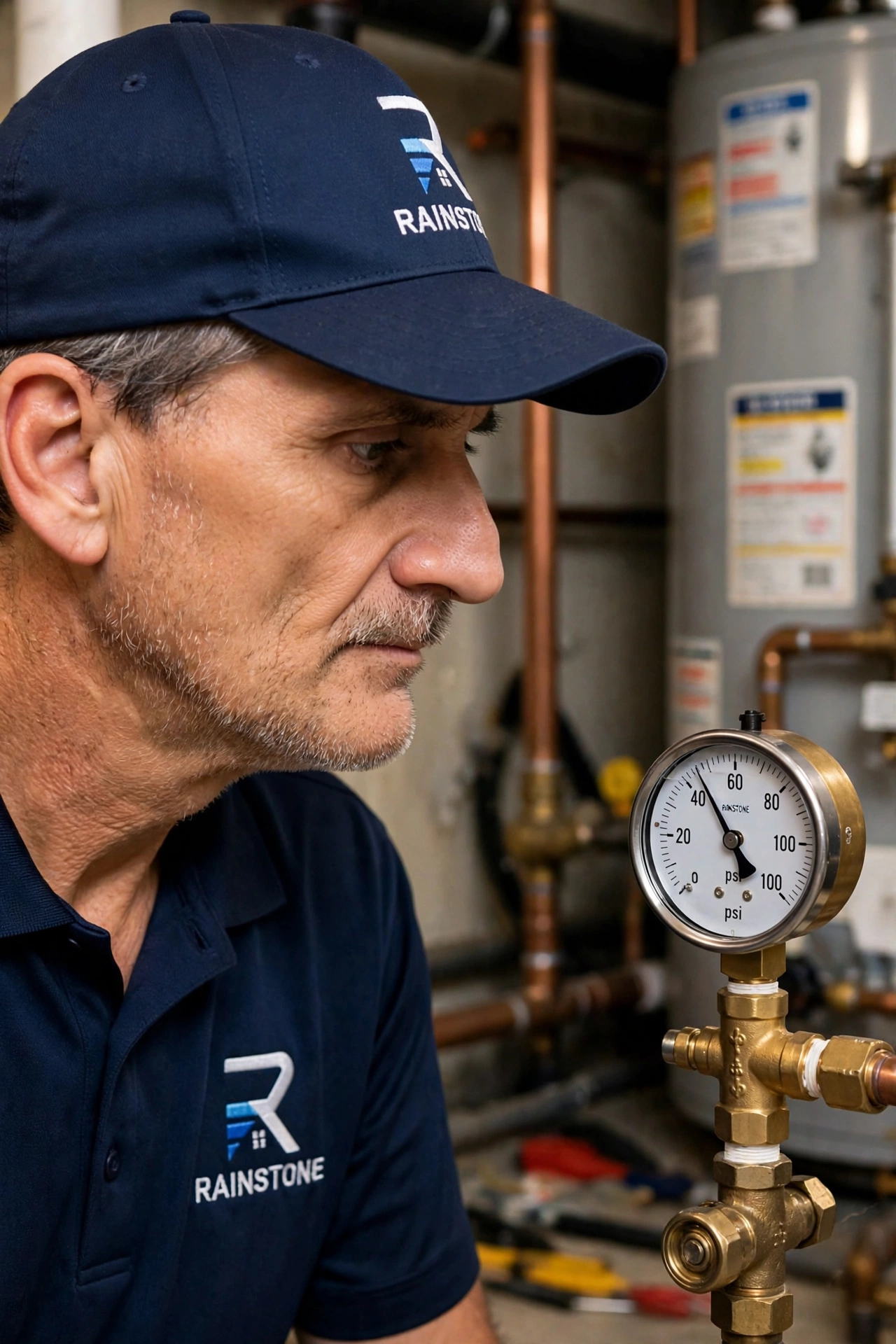
The temperature and pressure relief valve, commonly referred to as the TPR valve, is one of the most critical safety components on any water heater. This valve is designed to open and release pressure if the internal temperature or pressure inside the tank rises beyond safe operating levels, preventing potentially dangerous failures. During an inspection, our technicians test the TPR valve to confirm it is operational and opens and closes freely. A valve that has seized, corroded, or has never been tested since installation represents a significant safety hazard and should be replaced immediately to restore the unit to a safe operating condition.
Texas homes that have gone several years without a water heater inspection often contain TPR valves that have never been manually lifted and tested since the unit was first installed. Over time, mineral deposits from Texas’s characteristically hard water can cause the valve seat to seal shut, meaning the valve would fail to open even if the tank reached dangerous pressure levels. Our team tests this component as a standard part of every inspection, replacing it on-site where necessary and documenting the outcome for the homeowner’s records. This step alone is one of the most important reasons to schedule a professional inspection rather than attempting a DIY review of the unit.
Anode Rod Condition Check
The anode rod is a sacrificial metal rod, typically composed of magnesium or aluminum, suspended inside the water heater tank to attract corrosive elements from the water supply. Its purpose is to corrode in place of the steel tank walls, dramatically extending the working life of the unit. When the anode rod is fully depleted, the tank itself begins to corrode from the inside outward, leading to rust-tinted water, internal leaks, and ultimately premature tank failure. Inspecting and replacing the anode rod at the appropriate intervals is one of the most cost-effective forms of preventive maintenance available to Texas homeowners.
Checking the anode rod requires our technicians to access the top of the tank and remove the rod for a full visual assessment. A rod that is heavily corroded, significantly reduced in diameter, or encased in a calcium shell indicates it is approaching the end of its effective service life and should be replaced promptly. In Texas, where high mineral content in the groundwater accelerates anode depletion, homeowners may find that their rod requires replacement more frequently than the general industry recommendation of every three to five years. Identifying this at the inspection stage prevents the far greater expense of premature tank replacement due to unchecked internal corrosion that went unaddressed for too long.
Sediment Inspection and Flush Assessment
Mineral sediment, primarily calcium carbonate and magnesium deposits, accumulates at the base of water heater tanks as hard water is repeatedly heated and cooled inside the unit. This sediment layer acts as an insulating barrier between the heat source and the water above it, forcing the unit to consume more energy to achieve the target temperature. The buildup also produces the characteristic popping, rumbling, or crackling sounds that many Texas homeowners attribute to age but which are in fact the result of water bubbling through an increasingly thick mineral deposit at the tank base. Left unaddressed, significant sediment accumulation can shorten the unit’s useful life considerably and lead to premature deterioration of the tank lining and heating components.
During a water heater inspection, our technicians assess sediment levels by listening to the unit during operation, checking temperature consistency at the tap, and evaluating the quality of the discharge water. Where buildup is significant, a full tank flush is recommended as a follow-up service. According to the Texas Commission on Environmental Quality, elevated mineral content in groundwater is a widespread condition across many regions of the state, and properties supplied by well water or certain municipal sources are particularly susceptible to accelerated sediment accumulation inside water heating equipment and plumbing systems. Understanding this dynamic is central to how our team approaches every inspection we carry out across Texas.
Gas Line, Burner, and Flue Ventilation Checks
For gas-powered water heaters, which remain the most common type in Texas residential properties, the inspection includes a careful review of the gas supply connection, the burner assembly, and the flue venting system. Our technicians check gas line connections for any detectable odor or visible corrosion and confirm that the burner is igniting cleanly and producing the appropriate flame characteristics. A yellow or orange flame in place of a steady blue flame can indicate incomplete combustion, a blocked burner orifice, or an imbalance in the gas-to-air ratio, all of which warrant prompt attention from a qualified technician. Catching these issues early prevents both safety risks and ongoing inefficiency that inflates monthly energy costs.
Ventilation and flue inspection is equally important to the safe operation of a gas water heater in any Texas home. Combustion gases, including odorless and colorless carbon monoxide, must be vented safely out of the property through a properly maintained flue pipe system. Our technicians verify that the flue is correctly sized, free from obstructions such as collapsed sections or nesting material, and that all joints are properly sealed along the full length of the venting run. Compromised or improperly installed ventilation is one of the leading contributors to carbon monoxide risk in enclosed residential spaces, and a professional inspection is specifically designed to identify and address this type of hazard before it poses a danger to anyone living in the home.
Kurt’s take: An inspection earns its fee when it is willing to find nothing. I have sent homeowners away with a clean report and a flush reminder more times than I can count, and those are the calls that built this company’s name. — Kurt Pinkerton, Responsible Master Plumber, Lic. # M-21546
Texas Climate and Hard Water Conditions That Shape Water Heater Wear
The Effect of Texas Summer Temperatures on Water Heater Performance
Texas summers are among the most demanding in the continental United States, with many regions of the state routinely recording ambient temperatures above one hundred degrees Fahrenheit during July and August. While elevated outdoor temperatures do not directly damage the water heater tank itself, they have a meaningful impact on unit efficiency and thermostat calibration, particularly for units installed in garages, which is a common arrangement across Texas residential properties. Ambient temperatures in a Texas garage can reach extreme levels during peak summer months, and units in these spaces may experience performance changes as surrounding heat affects their operating environment in ways that were not present at the time of original installation.
Understanding how local climate conditions interact with a specific water heater type is an important part of what our technicians assess during an inspection. A unit that was correctly calibrated during a winter installation may be operating outside its optimal parameters by the time summer arrives, leading to inconsistent water temperatures and higher energy usage than the household expects. Our team checks thermostat settings, measures actual water temperature at the tap, and evaluates the unit’s recovery rate to determine whether its current performance is appropriate for its operating environment and the seasonal demands placed on it by the household throughout the Texas year.
Hard Water Zones and the Acceleration of Internal Water Heater Deterioration
Texas is well known for its hard water supply, particularly across the central and western regions of the state, where groundwater travels through extensive limestone and chalk deposits before reaching distribution points. The Edwards Plateau, the Permian Basin, and the Texas Hill Country are among the areas with the highest documented water hardness levels in the state, though elevated mineral content presents a consistent challenge for water heater owners across most of Texas. High calcium and magnesium concentrations in the water supply accelerate virtually every form of internal deterioration a water heater experiences over its service life, making regular professional inspection especially valuable for Texas homeowners.
Hard water causes limescale to form on heating elements in electric units, progressively reducing their efficiency and eventually causing burnout if not addressed. In tank-style units of all fuel types, calcium deposits accumulate inside pipes, connections, and fittings, increasing flow resistance and contributing to elevated internal operating pressure over time. Anode rods deplete more rapidly in high-mineral-content water supplies, and inner tank surfaces experience more persistent and aggressive contact with corrosive mineral compounds. Our inspections evaluate the extent of hard water damage within each unit and provide homeowners with a clear and specific assessment of the heater’s current condition and realistic remaining service life.
Aging Water Heaters in Older Texas Properties
Texas has experienced extraordinary population growth over the past two decades, but it also contains a substantial base of older housing stock across established neighborhoods in cities such as San Antonio, Garland, Waco, and Corpus Christi, as well as in rural counties throughout East and Central Texas. Many properties in these communities still contain water heaters that are more than ten or twelve years old, placing them at or beyond the standard industry service life for a conventional storage-tank unit. Property owners in these areas frequently operate aging systems without realizing how far the unit’s internal condition may have declined since it was first installed.
Older units carry a higher statistical risk of tank failure and operate at significantly lower efficiency levels than modern equivalents built to current federal energy standards. A water heater installed fifteen years ago may consume considerably more energy per gallon of hot water produced than a comparable new unit available today. An inspection of an aging unit provides homeowners with a detailed and honest assessment of whether continued servicing is financially sensible or whether replacement with a modern, more efficient model would deliver better long-term value for the property. Our technicians deliver straightforward evaluations, giving homeowners the accurate information they need to make the right decision for their home and household budget.
When to Book a Water Heater Inspection Across Texas
The Case for Annual Inspections as a Standard Practice
The most effective approach to water heater care is to schedule a professional inspection on an annual basis, regardless of whether the unit is showing obvious signs of trouble. Annual inspections allow our technicians to track changes in the unit’s condition over time, identify developing faults before they escalate into failures, and maintain component integrity through regular servicing tasks such as anode rod replacement and sediment flushing. Homeowners who invest in annual professional inspections consistently see longer unit lifespans and lower cumulative maintenance costs over the life of the water heater, compared to those who wait for a visible problem before calling for service.
For Texas property owners specifically, the combination of hard water supply conditions and high seasonal temperatures makes an annual inspection a particularly practical and financially sound investment. Units operating under additional environmental stress benefit from more frequent professional monitoring, and catching mineral-related deterioration early, before it reaches the tank walls or heating elements, can add several years to the working life of the unit. We recommend scheduling inspections in spring, ahead of the summer demand peak, to ensure the water heater is in optimal condition before it enters the months of highest thermal stress and peak household hot water usage.
Specific Warning Signs That Call for an Immediate Inspection
Beyond the routine annual schedule, certain circumstances should prompt a water heater inspection without delay. Discolored or rust-tinted hot water at the tap is among the most recognizable warning signs, indicating internal tank corrosion or a fully depleted anode rod that has allowed the tank lining to begin deteriorating. Hot water that runs out significantly faster than it previously did, or water that consistently fails to reach its previous temperature, may point to substantial sediment insulation at the tank base, a failing heating element, or thermostat calibration issues that have developed gradually over time without the homeowner’s awareness.
Unusual sounds from the unit during operation, whether a persistent popping, rumbling, or crackling, are almost always a sign that something within the system has changed and warrants professional investigation. Any visible moisture around the base of the tank, staining on the floor surface beneath the unit, or a persistent sense of dampness in the area surrounding the water heater should be treated as an immediate trigger to call for an inspection. With service coverage extending across Texas from the coastal communities of Galveston and Corpus Christi to the inland areas of Lubbock and Amarillo, our team is experienced in diagnosing the full range of conditions that affect water heaters across the state’s diverse property types, water supply characteristics, and climate zones.
Understanding Your Inspection Report and Recommended Next Steps
Following a professional water heater inspection, our technicians provide a clear summary of their findings, covering the condition of every component examined and any areas of concern identified during the visit. This documentation gives homeowners a factual basis for making maintenance decisions and serves as a useful record of the unit’s service history, which can be valuable when assessing warranty coverage or planning ahead for future replacement. Our team explains each finding in plain language, without unnecessary technical jargon, so that property owners across Texas can understand exactly what their water heater needs and why a particular course of action is being recommended.
Where an inspection identifies components that require immediate attention, such as a failed TPR valve or a severely depleted anode rod, our technicians are equipped to carry out repairs and replacements on the same visit in most cases, minimizing disruption to the household. For issues that require more extensive work, such as a sediment flush or a full unit replacement, we provide a clear and itemized outline of the recommended service and associated cost so that homeowners can make an informed decision without any pressure. Our goal at every inspection is to give Texas property owners a complete, honest, and actionable picture of their water heater’s current condition and the options available to them going forward.
Schedule Your Water Heater Inspection in Texas With Rainstone Water Heaters Today
Keeping your water heater in safe, efficient, and reliable condition is a sound investment in your home’s comfort and long-term value. At Rainstone Water Heaters, our professional inspection service covers every critical component of your system, from the pressure relief valve and anode rod to gas connections and flue ventilation, giving you a complete and accurate picture of your unit’s health and what it needs to keep performing reliably for years to come. Whether your property is in the Texas Hill Country, the DFW Metroplex, or along the Gulf Coast, our technicians bring the experience and local knowledge required to assess your water heater honestly and thoroughly. Call us today at (817) 580-8562 to book a service and take the first step toward a safer, more energy-efficient hot water system for your Texas home.
Local Water Heater Inspections teams:
- Water Heater Inspections in Garland
- Water Heater Inspections in Round Rock
- Water Heater Inspections in San Antonio
Water Heater Inspections in Texas: the numbers we work by
| What we check | Why it matters |
|---|---|
| Tank condition and age (from the serial label) | Most tanks live 8–12 years; knowing where yours sits changes every other decision |
| T&P relief valve | The safety device of last resort — it must open, and it must discharge somewhere safe |
| Venting and combustion (gas units) | Poor draft is a carbon monoxide risk, not a comfort issue |
| Anode rod, fittings, and shut-offs | The cheap parts whose failure becomes the expensive damage |
| The inspection itself | Booked as a $125 service call — findings in plain language, quote in writing if anything needs work |
How we handle it, step by step
- We read the unit’s history — age from the serial label, service stickers, and the condition of everything connected to it.
- We test the safety devices — T&P valve function and gas venting draft on combustion units.
- We hunt the quiet problems — anode depletion, fitting corrosion, sediment load, and slow leaks.
- You get the findings straight — what is fine, what to watch, and what to fix, with written pricing for anything we recommend.
I have spent 38 years in this trade, 27 of them as a master plumber, and the pattern has never changed: the expensive failures almost always start as cheap ones somebody ignored.
My honest take: an inspection that always ends in a replacement recommendation is not an inspection — it is a sales call with a clipboard. When we inspect a healthy unit, we say so, charge for the visit, and leave. That restraint is the whole product.
For an independent cross-check on the numbers above: the U.S. Department of Energy’s homeowner guidance puts a conventional storage water heater’s service life at roughly 10–15 years and recommends a thermostat setting of 120°F. The lifespan and price figures in our table are the ones Rainstone publishes in its own Texas cost guides — and the ones we stand behind on every written quote.
Ready when you are — call 817-580-8562 any day from 5 AM to 11 PM, and we will take it from there. — Kurt Pinkerton, Responsible Master Plumber, Lic. # M-21546