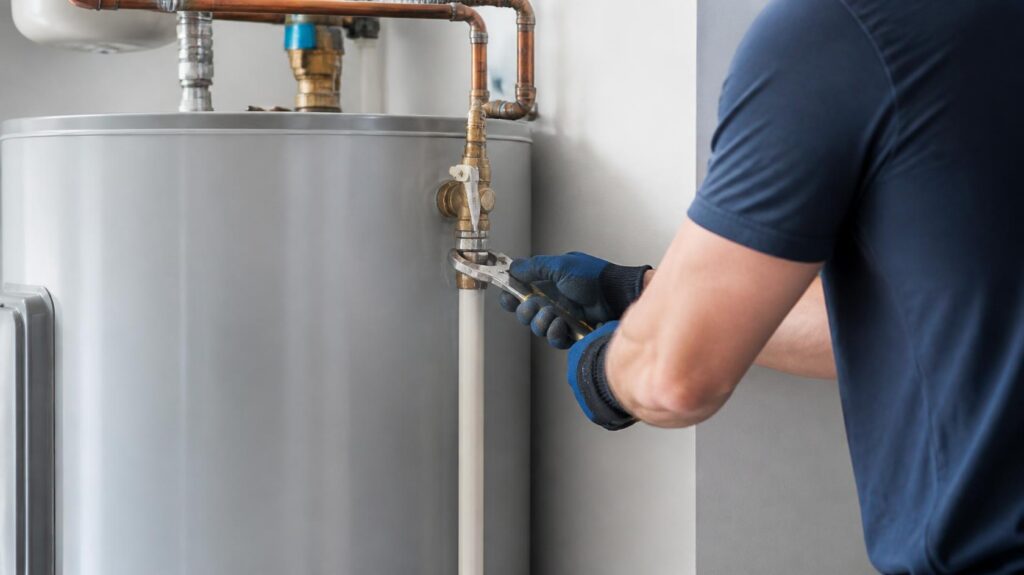
A functioning water heater is something most Texas homeowners only notice when it stops working. Whether the fault presents as an unexpected cold shower, a puddle forming beneath the unit, or a drop in hot water pressure that grows worse by the day, water heater problems require prompt, professional attention to restore your household’s supply safely and efficiently. At Rainstone Water Heaters, we diagnose and repair water heaters across Texas, handling everything from thermostat replacements and failed heating elements to corroded internal components and pressure relief valve faults. Our technicians work with gas, electric, and hybrid units of all major brands and configurations. If your water heater is giving you trouble, call (817) 580-8562 today to book a service and get your system working again.
When a water heater fails, the first job is not turning a wrench — it is finding the real fault. I am Kurt Pinkerton, Rainstone’s responsible master plumber, and I have built our repair work around one rule: we diagnose first, quote in writing, and only then repair. Across Texas, that means the same standard in every driveway: a $125 service call, a written quote, and work I am willing to sign my name to. Call us at 817-580-8562 and you will get exactly that.
Common Water Heater Faults Repaired Across Texas Properties
Thermostat Failures and Inconsistent Water Temperature
One of the most frequently reported water heater problems in Texas homes is inconsistent or insufficient hot water, and in many cases, the root cause is a thermostat failure rather than a more serious structural fault. Electric water heaters typically use two thermostats, one positioned in the upper section of the tank and one in the lower section, each controlling a corresponding heating element. When either thermostat fails, the element it controls stops activating at the correct time, resulting in water that fails to reach the set temperature or hot water that runs out significantly faster than it used to. Diagnosing which thermostat has failed and replacing it correctly restores the unit to full output without the need for a more invasive or expensive repair.
Gas water heaters use a different type of thermostat integrated into the gas valve assembly, and failures in this component can produce a range of symptoms, including water that is consistently too cool, water that overheats, or a unit that cycles on and off irregularly. Unlike electric thermostat replacements, gas valve thermostat issues sometimes require replacement of the full gas control valve, which is a repair that demands proper qualifications and careful handling. Our technicians test thermostat function as part of every fault diagnosis visit, confirming whether the thermostat alone is responsible or whether additional components are involved before recommending and proceeding with any repair work.
Heating Element Failure in Electric Water Heaters
Heating element failure is among the most common repair needs for electric water heaters across Texas, and the state’s hard water supply plays a significant role in accelerating the rate at which elements reach the end of their service life. Electric water heater elements are submerged directly in the water inside the tank and are designed to heat the surrounding water through direct contact. Over time, calcium and magnesium deposits from hard water accumulate on the surface of the element, forming a layer of insulating limescale that forces the element to work at higher temperatures than it was designed for. This sustained thermal stress causes the element to fail prematurely, sometimes within a fraction of its expected service life in areas with particularly hard water.
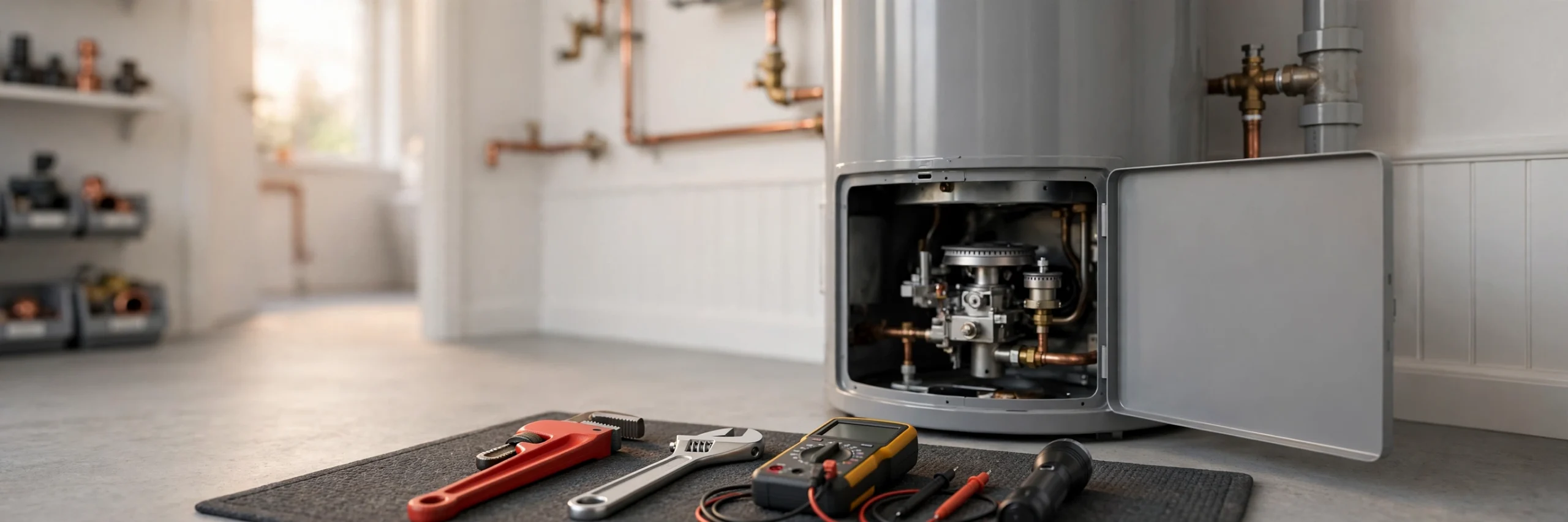
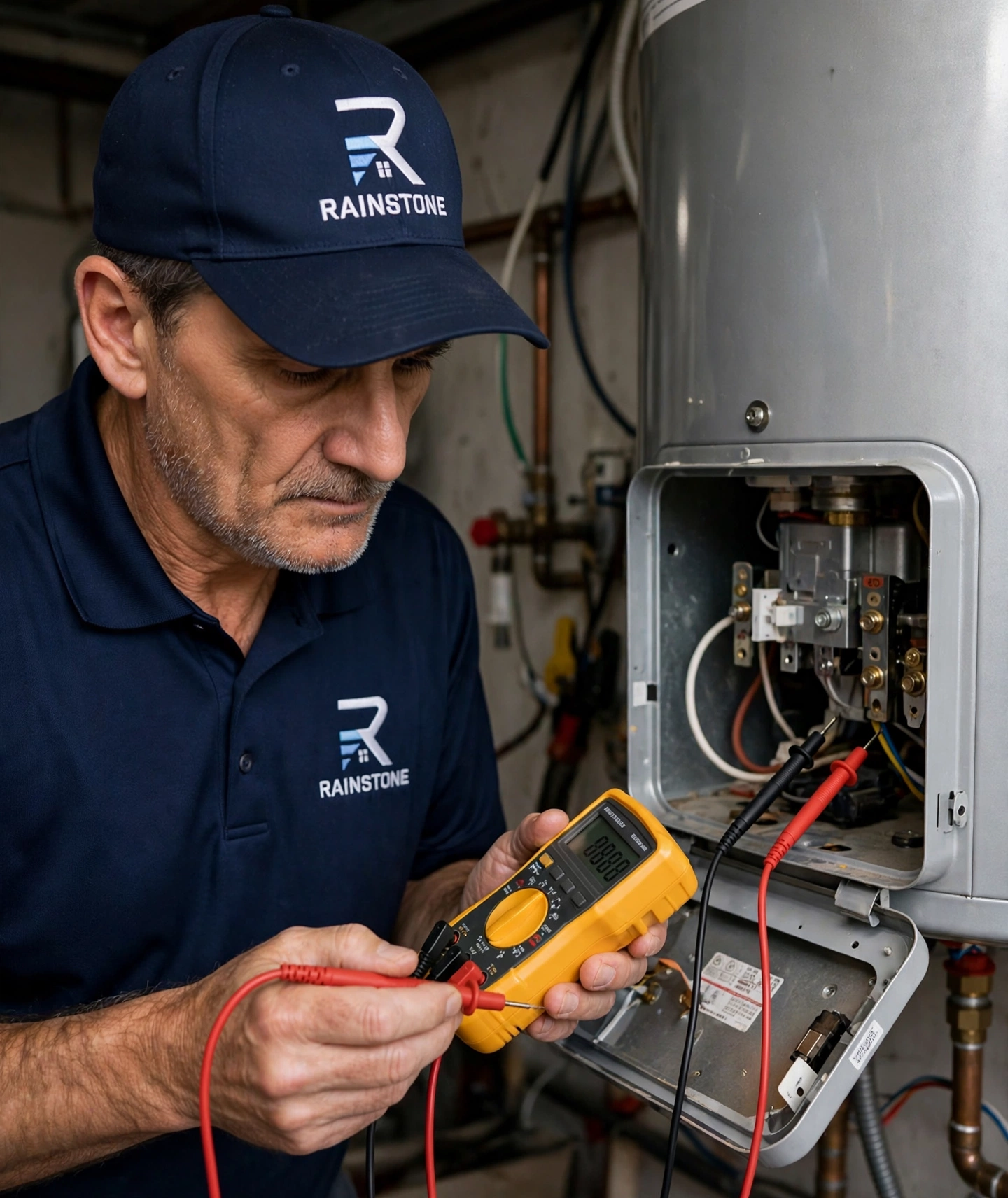
The symptoms of a failed heating element typically include water that fails to heat at all, a dramatic reduction in the volume of hot water available, or hot water that reaches temperature but is depleted far too quickly. Our technicians use an electrical multimeter to test element continuity and confirm which element has failed before beginning any replacement work. In many cases, both elements are replaced at the same time if they are of similar age, since a second failure shortly after the first is common in units that have been in service for several years. Replacing elements promptly prevents additional stress on the surviving element and restores full heating capacity to the unit.
Pilot Light and Ignition Failures in Gas Water Heaters
Gas water heaters depend on a reliable ignition system to function safely and consistently, and problems with the pilot light or electronic igniter are among the most common repair calls we receive from Texas homeowners with gas-powered units. On older units equipped with a standing pilot light, the most frequent point of failure is the thermocouple, a small heat-sensing device that monitors whether the pilot flame is present and holds the gas valve open as long as it detects heat. When the thermocouple wears out or becomes corroded, it sends an incorrect signal that causes the gas valve to close even when the pilot is lit, resulting in a unit that cannot stay running. Thermocouple replacement is a straightforward repair that restores ignition reliability quickly and at relatively low cost.
On newer gas water heaters with electronic ignition systems, the failure points are different and may involve a faulty spark igniter, a damaged control board, or a defective gas valve that prevents the burner from receiving gas at the correct moment. Electronic ignition failures can sometimes mimic symptoms of other faults, making accurate diagnosis particularly important before any parts are ordered or replaced. Our technicians are experienced with the ignition systems used across all major water heater brands common in Texas properties and carry the diagnostic equipment needed to isolate the exact fault rather than replacing components on a best-guess basis.
Failed or Weeping Pressure Relief Valves Requiring Replacement
While a pressure relief valve inspection is a standard part of routine maintenance, the valve itself can also develop faults that require repair or outright replacement outside of a scheduled service visit. A TPR valve that has begun to weep or drip continuously is a sign that the valve seat is no longer sealing properly, either because the valve has been triggered and subsequently failed to reseat, because mineral scale has prevented full closure, or because the internal spring has weakened to the point where it can no longer hold the valve closed against normal operating pressure. A dripping TPR valve is not simply an inconvenience — it indicates a component that is no longer functioning as designed and should be replaced without delay.
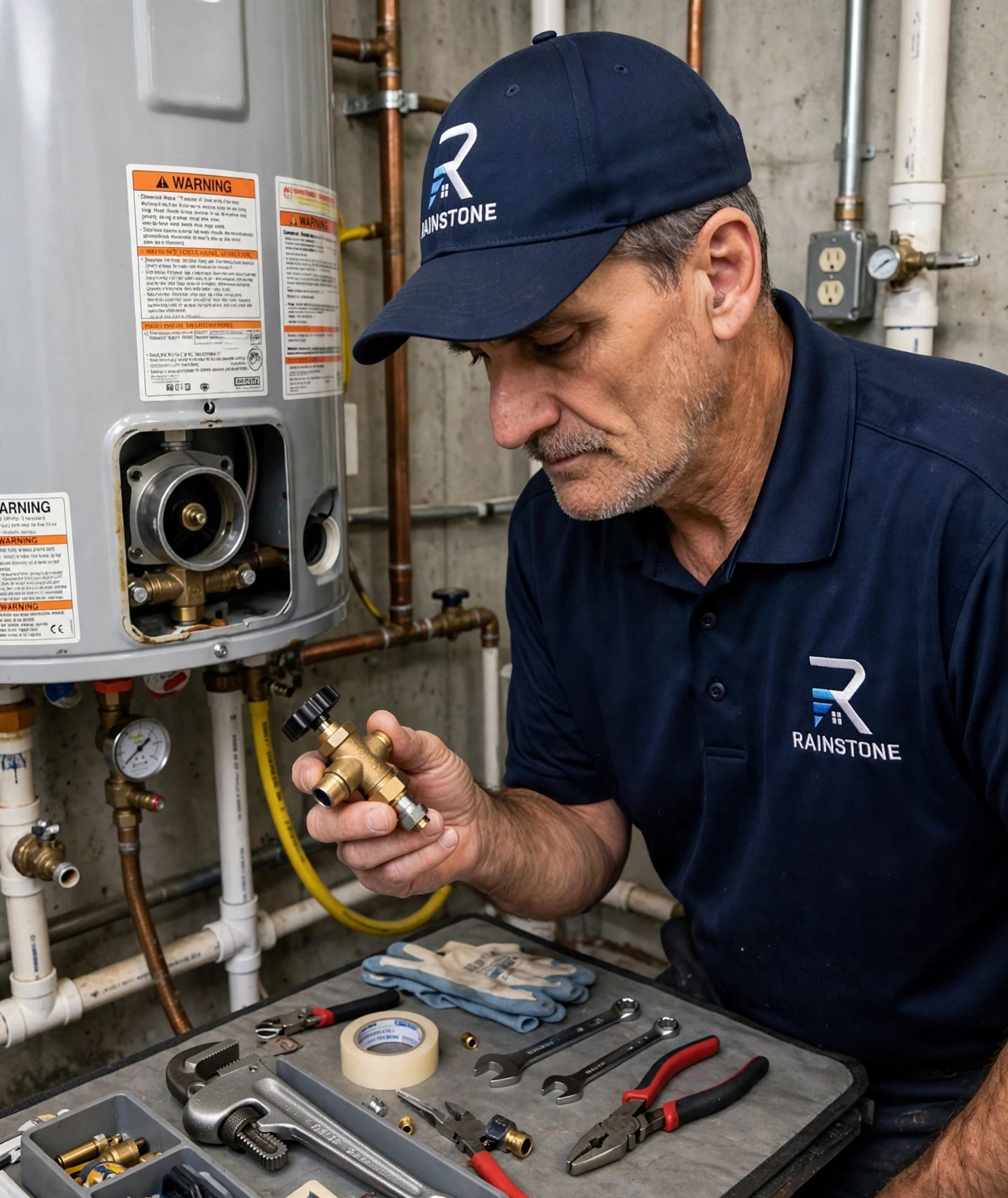
In Texas homes where water quality is hard, and the unit has not received regular maintenance, mineral-related TPR valve failure is a recurring repair issue. Our technicians replace faulty valves with correctly rated replacements matched to the unit’s specific pressure and temperature specifications, ensuring the new valve provides appropriate protection for the tank it serves. It is important that replacement valves are not simply the closest available option but are correctly matched to the water heater’s BTU rating and working pressure, a detail that our team verifies on every repair visit to ensure the unit is protected and operating within safe parameters after the work is completed.
Dip Tube Deterioration and Cold Water Mixing in the Supply
The dip tube is a plastic pipe that runs from the cold water inlet at the top of the tank down to the lower section, directing incoming cold water to the bottom of the tank where it is heated before rising to the top for use. When the dip tube deteriorates or breaks, incoming cold water is deposited directly into the upper section of the tank, mixing with the hot water already stored there and significantly reducing the effective temperature of the supply. Homeowners with a failing dip tube often report that their water heater appears to be functioning but that the hot water consistently feels lukewarm or runs cold far sooner than expected, even with the thermostat set correctly.
Dip tube failures were particularly widespread in units manufactured during certain periods in the 1990s when a manufacturing defect caused accelerated deterioration, but the component can fail in any unit that has been in service for many years. A further complication is that when a plastic dip tube breaks apart, fragments of the material can travel into household plumbing and become lodged in faucet aerators and showerhead filters, causing reduced flow across multiple fixtures. Our technicians assess dip tube condition as part of every repair visit where a temperature complaint is reported, replacing the tube where necessary and advising homeowners to flush aerators if fragments have already entered the plumbing system.
Kurt’s take: A repair is a promise with my license number on it, M-21546. If we fix a heater, the diagnosis, the part, and the reasoning are in writing before the wrench turns — that is the standard on every Rainstone repair. — Kurt Pinkerton, Responsible Master Plumber, Lic. # M-21546
Texas Water Conditions and Their Influence on Repair Frequency and Complexity
How Limescale Accumulation in Hard Water Areas Drives Premature Component Failure
Texas ranks among the states with the highest concentration of hard water communities in the country, with a significant proportion of the population receiving water that carries elevated levels of dissolved calcium and magnesium. While the health implications of hard water are minimal, its effects on water heating equipment are substantial and well-documented. Limescale deposits that accumulate on heating elements in electric units reduce the element’s ability to transfer heat efficiently to the surrounding water, causing the element to run hotter and longer to compensate. This elevated thermal cycle is a leading driver of premature element failure in Texas homes, and it means that replacement intervals in hard water areas are often considerably shorter than manufacturers’ general estimates.
The same mineral deposits that damage elements also accumulate on gas burner assemblies, gas valve orifices, and the internal surfaces of the heat exchanger in condensing units, restricting gas flow and combustion efficiency over time. In areas of Central and West Texas where water hardness is particularly pronounced, our technicians frequently encounter units that have experienced multiple component failures within a short time frame due to the combined effects of mineral buildup going unaddressed. Regular servicing that includes descaling and component checks can substantially reduce the frequency and cost of repairs in these high-hardness regions, and our team provides specific recommendations based on the water conditions at each property we service.
Corrosive Water Chemistry and Its Impact on Tank Fittings and Internal Connections
Beyond hardness, the pH and chemical composition of the water supply in certain areas of Texas can accelerate corrosion of metal components inside the water heater in ways that go beyond simple mineral scale. Water with a low pH, or acidic water, is more aggressive toward metal surfaces and can attack copper fittings, brass connections, and steel tank linings at a faster rate than water within a neutral pH range. Properties in parts of Texas that draw from certain aquifer systems or that use rainwater harvesting may be more likely to encounter this type of corrosive water chemistry, which can accelerate the deterioration of internal connections and lead to pinhole leaks in pipes and fittings around the unit.
Corrosion-related repair needs often present first at the connections closest to the tank, including the cold inlet and hot outlet nipples, the relief valve fitting, and the drain valve at the base of the tank. These components are commonly constructed from dielectric materials designed to prevent galvanic corrosion where dissimilar metals meet, but they still degrade over time, particularly in chemically aggressive water supplies. Our technicians inspect all connection points during a repair visit, replacing corroded nipples, valves, and fittings as part of a broader effort to address not just the presenting fault but also the secondary issues that the same underlying water chemistry has caused across the unit.
Repair Challenges Specific to Texas Properties Served by Well Water
A meaningful proportion of Texas properties, particularly those located in rural counties and smaller communities beyond the reach of large municipal water systems, rely on private groundwater wells for their water supply. Well water in Texas varies considerably in its mineral content, pH, iron concentration, and the presence of other dissolved compounds, depending on the specific aquifer and geology of each location. Without the conditioning that municipal water treatment provides, well water often reaches the water heater with a higher load of dissolved minerals, sediment particles, and, in some cases, iron or sulfur compounds that create additional repair challenges not typically encountered in urban properties on a treated municipal supply.
Iron-bearing water, for example, can cause staining of the tank interior and accelerate deterioration of the anode rod and heating elements in ways that differ from the standard hard water damage pattern seen in municipal supply areas. Sulfur compounds in well water can react with magnesium anode rods to produce a hydrogen sulfide gas that creates an unpleasant rotten egg odor in the hot water supply, a problem that requires both a repair visit and a specific anode rod material change to resolve. Our technicians are experienced in working with the full range of well water conditions encountered across rural Texas and adjust their diagnostic approach and repair recommendations accordingly when a property is on a private well supply.
The Rainstone Water Heaters Repair Process From First Call to Completion
Accurate Fault Diagnosis Before Any Repair Work Begins
A common frustration for homeowners who have dealt with water heater problems is receiving a repair that addresses the wrong fault, leaving the underlying issue unresolved and requiring a second service call. At Rainstone Water Heaters, our technicians carry out a structured diagnostic process before any repair work is started or any parts are ordered. This process involves a combination of visual inspection, component testing, and where applicable, measurement of operating parameters such as water temperature, element resistance, and gas pressure at the burner. The goal is to confirm the specific fault with certainty rather than proceeding on assumption, which reduces the likelihood of an unnecessary component replacement and ensures that the repair addresses the actual cause of the problem.
Effective diagnosis also involves taking the homeowner’s account of the problem seriously and asking the right questions about how and when the fault first presented, what has changed in the household’s water usage, and whether any recent work has been carried out on the unit or the plumbing connected to it. A description of symptoms that develops gradually over weeks is often indicative of a different type of fault than one that appeared suddenly overnight, and this context shapes the direction of our diagnostic approach. According to the U.S. Department of Energy’s guidance on water heating and energy efficiency, a significant proportion of water heater performance issues are linked to maintenance deficiencies rather than component failure, making thorough diagnosis a critical step before any repair is carried out.
Repair Turnaround and Coverage Across Texas
For many common water heater faults, our technicians arrive equipped with the parts most likely to be required based on the symptoms described at the time of booking, which allows a significant proportion of repairs to be completed in a single visit. Standard components such as thermostats, heating elements, thermocouples, dip tubes, and pressure relief valves are items our team routinely stocks on the vehicle, meaning that for these repairs, the homeowner’s hot water is often restored on the same day the fault is reported. For less common components or units requiring manufacturer-specific parts, we provide a clear timeline for parts sourcing and schedule a follow-up visit as promptly as possible to minimize the period the household is without hot water.
Rainstone Water Heaters services properties across the full extent of Texas, from the major metropolitan areas of Dallas, Fort Worth, San Antonio, and Houston to smaller communities and rural properties throughout the state. We understand that being without hot water is not merely an inconvenience but affects daily routines, hygiene, and in the case of commercial or rental properties, the welfare of multiple occupants. Our team works to provide repair appointments as quickly as possible following initial contact, and we keep homeowners informed throughout the process from the initial diagnosis to the completion of the repair and the confirmation that the unit is fully operational.
Contact Rainstone Water Heaters for Water Heater Repairs in Texas Today
When your water heater develops a fault, waiting is rarely a productive option. Small issues with thermostats, heating elements, and pressure components can escalate quickly into more serious and costly damage if left unaddressed, particularly in a Texas climate where units are already operating under the additional strain of hard water and high ambient temperatures. At Rainstone Water Heaters, our repair team is equipped to diagnose and resolve the full range of water heater faults across gas, electric, and hybrid units throughout the state. Whether you are located in a major Texas city or a rural community served by a private well, we provide the same standard of careful, accurate, and professionally completed repair work on every visit. Call us at (817) 580-8562 to book a service today and restore your home’s hot water supply.
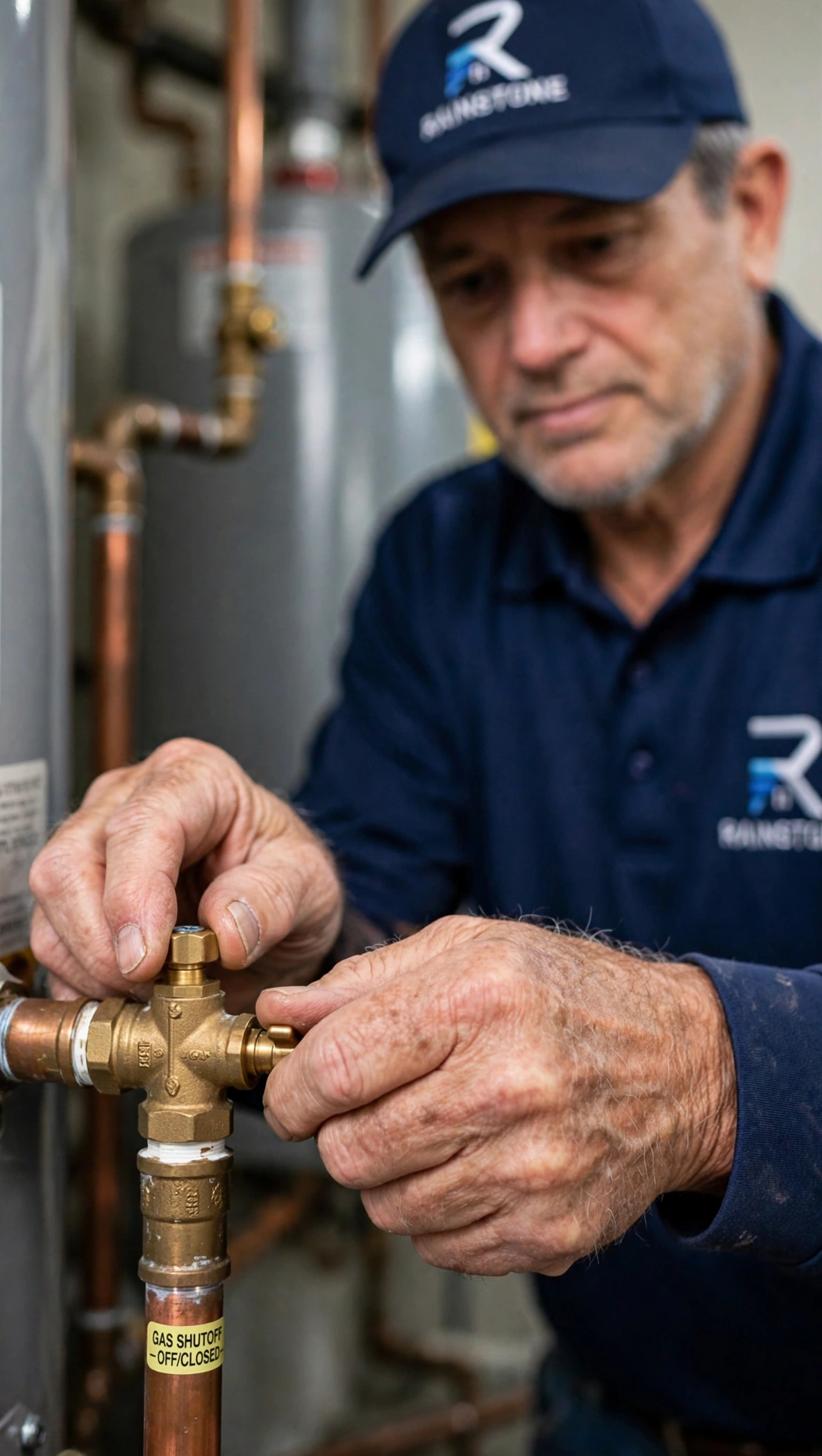
Water Heater Repairs in Texas: the numbers we work by
| Common repair | What you pay | How we handle it |
|---|---|---|
| Diagnosis / service call | $125 | We find the fault and give you a written quote before any repair begins |
| Gas control valve replacement | $615 | One of the most common gas-unit repairs we make — priced flat, not by the hour |
| Heating elements, thermostats, anode rods, T&P valves | Quoted in writing after diagnosis | The $125 service call comes first, so the quote is based on your unit, not a guess over the phone |
How we handle it, step by step
- You call, we come out for a $125 service call. A licensed technician tests the unit — thermostats, elements, gas valve, venting, and the tank itself.
- You get the quote in writing. If a part fixes it, the quote says so. If the tank is gone, we say that instead, and show you why.
- We repair only what you approved. No add-ons appear on the invoice that were not on the quote.
- We test under load before we leave. Hot water at the tap, no leaks at the fittings, and the work area left clean.
I have spent 38 years in this trade, 27 of them as a master plumber, and the pattern has never changed: the expensive failures almost always start as cheap ones somebody ignored.
My honest take on repair quotes: be wary of any company that prices a repair over the phone without seeing the unit, and warier still of one whose answer to every fault is a new water heater. A failed thermostat is a repair. A rusted-through tank is not, and a good plumber tells you which one you have — with the evidence in front of you.
Ready when you are — call 817-580-8562 any day from 5 AM to 11 PM, and we will take it from there. — Kurt Pinkerton, Responsible Master Plumber, Lic. # M-21546
Water Heater Repairs in your city: