Some water heater problems can wait for a scheduled appointment. Others cannot. A gas smell near the unit, a rapidly spreading water leak from a failing tank, or visible signs of a pressure fault are situations that demand an immediate response — not because of inconvenience, but because of the genuine risk to property and personal safety that unresolved water heater emergencies can escalate into. At Rainstone Water Heaters, we take emergency calls seriously and respond to urgent water heater situations across Texas as promptly as conditions allow. If your water heater is presenting signs of a serious fault right now, call us immediately at (817) 580-8562 to book a service and get a qualified technician on the way to your property as quickly as possible.
A burst tank does not care what time it is, and neither does the water spreading across your floor. I am Kurt Pinkerton, Rainstone’s responsible master plumber. We answer from 5 AM to 11 PM, seven days a week — and here is what to do in the minutes before we get to you. Across Texas, that means the same standard in every driveway: a $125 service call, a written quote, and work I am willing to sign my name to. Call us at 817-580-8562 and you will get exactly that.
Recognizing a True Water Heater Emergency and Responding Safely
Gas Leaks and Carbon Monoxide Risk: Situations That Require Immediate Evacuation
In Texas, where natural gas is the dominant fuel source for residential water heaters, gas-related emergencies represent the most serious category of water heater fault a homeowner can encounter. A detectable sulfur or rotten egg odor near the water heater — the characteristic smell of the mercaptan odorant added to natural gas for detection purposes — is an immediate evacuation signal. If you detect this smell, do not attempt to investigate the source, turn any appliances on or off, or use a phone while still inside the property. Leave the building immediately, leaving doors open as you exit to allow ventilation, and call your gas utility’s emergency line and 911 from a safe distance outside. Do not re-enter until the gas company or emergency responders have confirmed the property is safe.
Carbon monoxide risk from a malfunctioning gas water heater is a separate but equally serious concern, particularly in properties where the flue ventilation system has been compromised or blocked. Because carbon monoxide is odorless and colorless, there is no sensory warning that the gas is accumulating in an enclosed space, making a functioning carbon monoxide detector in the vicinity of any gas appliance an essential safety device for every Texas home. Symptoms of carbon monoxide exposure including unexplained headache, nausea, dizziness, or confusion that clears when you leave the building should be treated as a serious warning to evacuate and seek emergency assistance. The Railroad Commission of Texas, which regulates natural gas distribution and safety across the state, provides guidance on gas appliance safety and the proper installation of carbon monoxide detection equipment.
Major Water Leaks and the Immediate Risk of Property Flooding
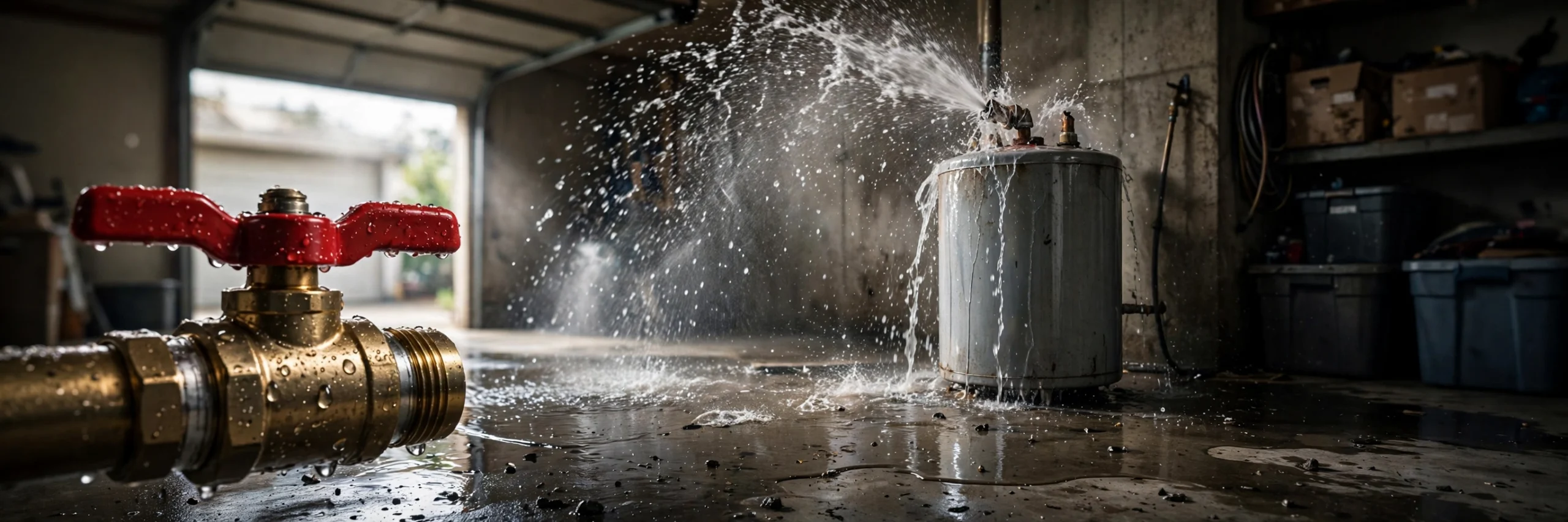
A water heater tank that has failed structurally can release its full stored volume of water in a very short time, causing significant flooding and water damage to the floor, walls, and any items stored in the vicinity of the unit. The risk is greatest in garage installations, where a tank failure can release water across a concrete floor and quickly spread into adjacent living spaces or under walls, and in indoor utility rooms, where carpeting, cabinetry, and drywall are immediately exposed to damage. Older tanks that have developed internal corrosion without visible external warning signs can fail suddenly at a weakened point in the tank lining, releasing the entire contents without the gradual dripping that might otherwise prompt a maintenance call.
Texas summers can subject older tanks to significant thermal and pressure stress, particularly in unconditioned garage spaces where ambient temperatures during peak months can dramatically elevate the temperature of the unit’s operating environment. This seasonal stress accelerates the final stage of tank failure in units that are already internally compromised, increasing the probability of a sudden tank rupture during the hottest months of the year. If you notice a rapidly expanding pool of water around your water heater rather than a slow drip, this constitutes an emergency requiring immediate action to shut off the water supply and contact a professional technician.
Pressure Faults and Relief Valve Activation as Emergency Indicators
If the temperature and pressure relief valve on your water heater is actively discharging a continuous or heavy stream of hot water from the discharge pipe, this is a sign that the unit has developed an abnormal pressure or temperature condition that is actively triggering the safety valve. A TPR valve that activates once and reseats may be responding to a temporary pressure spike, but a valve that continues to discharge or activates repeatedly is indicating that the underlying pressure or temperature condition within the tank has not been resolved. Continuing to operate the unit in this state risks both scalding from the hot water discharge and the possibility of a pressure-related tank failure if the condition escalates beyond what the valve can safely relieve.
Homeowners who discover that a TPR valve has been discharging unnoticed over an extended period should also be alert to the possibility of structural weakening of the tank or associated plumbing from the sustained stress. This situation requires an emergency inspection by a qualified technician rather than a wait-and-see approach, as the underlying cause of repeated valve activation — whether a failed thermostat driving overheating or a closed-system pressure buildup — will not resolve on its own and presents an ongoing safety risk until it is professionally diagnosed and corrected.
Kurt’s take: My grandfather taught me that on a customer’s worst day, the plumber’s first tool is calm. Shut the water off, make the house safe, and only then talk about equipment. That order has never changed in 38 years. — Kurt Pinkerton, Responsible Master Plumber, Lic. # M-21546
What to Do While Waiting for Your Emergency Technician to Arrive
Shutting Off the Gas or Electrical Supply to the Unit Safely
In the absence of a gas leak, which requires full property evacuation rather than local isolation, a malfunctioning gas water heater can be rendered safe in the short term by closing the gas shut-off valve on the supply line feeding the unit. This valve is typically located on the gas pipe within a few feet of the unit and can usually be closed by turning the handle perpendicular to the pipe direction. Closing this valve cuts the gas supply to the water heater only and does not affect other gas appliances in the property. Once the gas supply is isolated, the unit cannot ignite, removing the burner-related component of the risk while you wait for the technician to arrive.
For electric water heaters, the equivalent step is switching off the dedicated circuit breaker for the water heater at the property’s electrical panel. This de-energizes the heating elements and the control electronics, preventing further overheating or electrical faults while the unit is in an abnormal state. Switching off the breaker does not drain the tank or stop the flow of water if a leak has already begun, but it eliminates the risk of electrical faults from a unit that may be partially flooded or operating in conditions outside its design parameters. Both of these isolation steps are straightforward for most homeowners to carry out safely, but if there is any uncertainty about the location of the shut-off valve or the relevant breaker, it is safer to leave the unit and wait for the technician than to risk an incorrect intervention.
Controlling a Water Leak Before the Technician Arrives
If a water heater is actively leaking, the most effective immediate step a homeowner can take is to close the cold water supply valve to the unit, which prevents new water from entering the tank and limits the total volume of water that can escape while the fault is unresolved. The cold supply valve is typically located on the cold water inlet pipe at the top of the unit and can usually be closed by hand without any tools. Once the supply is closed, any remaining water in the tank will continue to leak from the point of failure, but the rate will slow as the tank pressure equalizes. Placing towels, buckets, or any available absorbent material around the base of the unit can help contain the spread of water while you wait for the technician, reducing the area of the floor and surrounding space that is exposed to water damage before the fault is professionally resolved.
For properties in rural Texas communities or areas with longer technician travel times from the nearest service hub, having a basic familiarity with these isolation steps before an emergency occurs can meaningfully limit the damage that a water heater failure causes to the property. According to the U.S. Consumer Product Safety Commission, water heater failures are among the more common sources of significant residential water damage, and knowing how to isolate the water supply quickly is one of the simplest and most effective damage-control steps available to a homeowner in the first minutes of a water heater emergency.
Information to Have Ready When You Call for Emergency Service
When you call Rainstone Water Heaters for emergency assistance, having certain information on hand helps our team dispatch the right technician with the right equipment and respond as efficiently as possible. The most useful details to have ready include the fuel type of your water heater — gas or electric — the approximate age of the unit if you know it, a brief description of the symptoms you are seeing or the events that prompted the call, and the full address of the property. If the unit has a visible model or serial number plate, this information can also help our team identify the unit type and prepare for the most likely components required for the repair.
With emergency service coverage extending across Texas from major metropolitan centers including Dallas, Fort Worth, San Antonio, and Houston to regional communities and rural properties throughout the state, our team works to reach emergency call locations as promptly as scheduling and travel allow. We understand that a water heater emergency affects the entire household and that a swift, professional response is what homeowners in that situation need most. Call us at (817) 580-8562 the moment you recognize a water heater emergency on your Texas property, and our team will work to get you the help you need.
Call Rainstone Water Heaters for Emergency Water Heater Repairs in Texas Today
When your water heater develops a fault that cannot wait, the team at Rainstone Water Heaters is the number to call. We provide professional emergency water heater repair services across Texas, responding to gas-related faults, major tank leaks, pressure failures, and complete system shutdowns with the urgency and technical skill that these situations demand. From the suburban communities of the DFW Metroplex to the coastal areas of the Gulf Coast and the ranching communities of West Texas, our technicians bring the right tools and the right knowledge to resolve water heater emergencies safely and effectively. Do not delay if your water heater is showing signs of a serious fault — call us immediately at (817) 580-8562 to book an emergency service and protect your home and your household.
Emergency Water Heater Repairs near you:
- Emergency Water Heater Repairs in Garland
- Emergency Water Heater Repairs in Round Rock
- Emergency Water Heater Repairs in San Antonio

Emergency Water Heater Repairs in Texas: the numbers we work by
| Situation | Verdict |
|---|---|
| Water actively leaking or flooding | Emergency — shut the water off and call us |
| Smell of gas near the unit | Emergency — leave the area, call your gas utility from outside, then call us |
| T&P valve discharging repeatedly | Emergency — the unit is over-pressurizing or overheating |
| No hot water, no leak, no smell | Urgent, not an emergency — a $125 service call, booked same-day where we can |
| Rumbling, popping, or discolored water | Not an emergency — sediment or anode trouble; book a maintenance visit before it becomes one |
How we handle it, step by step
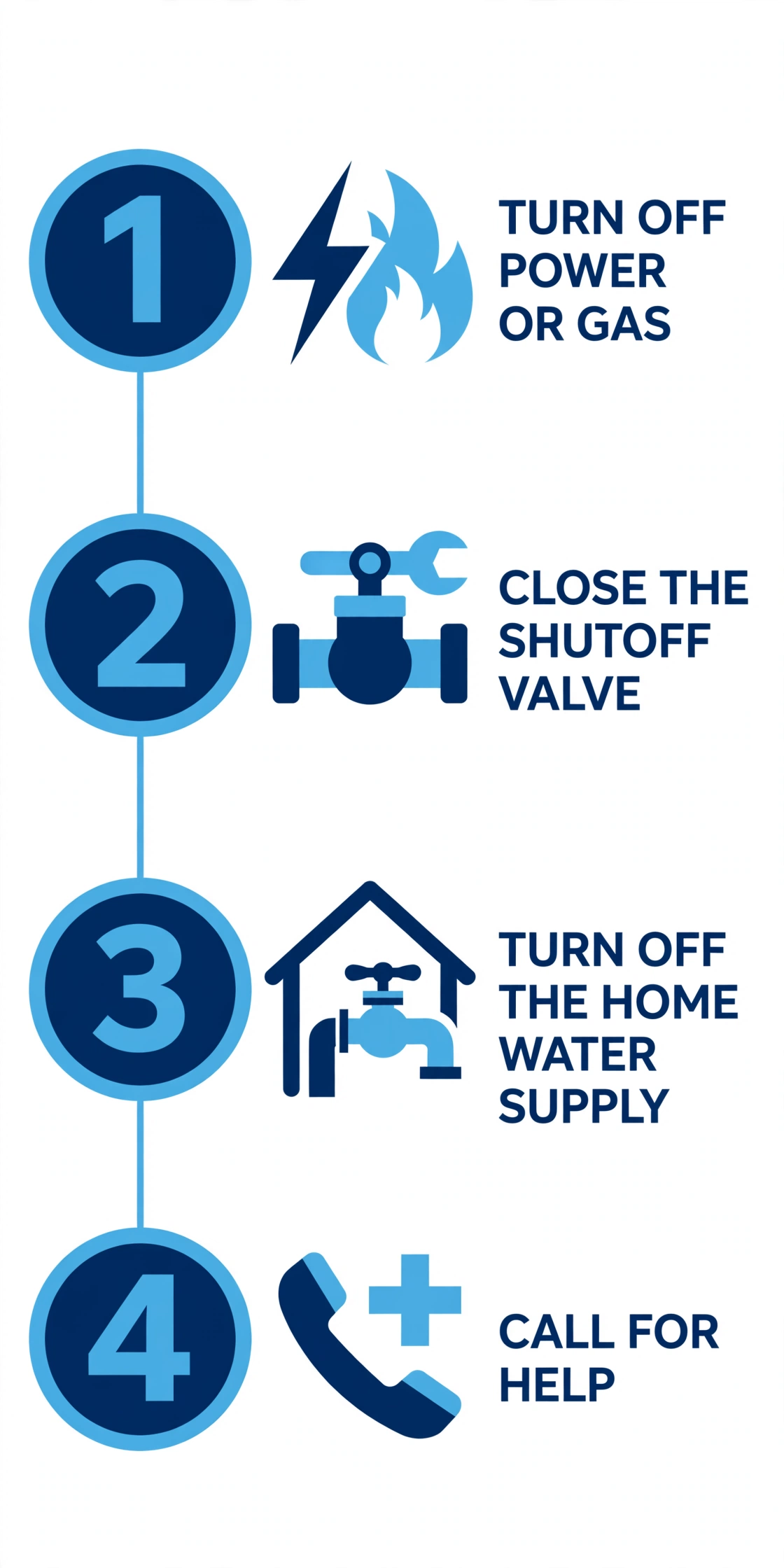
- Shut the water off. The cold inlet valve on top of the unit, turned clockwise — or your home’s main shut-off if the valve will not budge.
- Kill the energy. Gas units: turn the control knob to OFF. Electric units: flip the breaker.
- Protect the floor. Towels and a bucket buy real time; move anything stored near the unit out of the water’s path.
- Call us at the number on this page. Tell us what you see — leaking, cold, or smelling of gas — and we dispatch with the right parts on the truck.
I am a perfectionist about one thing above all: we leave your home as clean as we found it, or cleaner. A crew that is careless with your floors will be careless with your gas line, and I have believed that through 38 years of plumbing.
My honest take on ’emergency’ pricing: your worst morning should not be a company’s best invoice. Our emergency work starts with the same $125 service call and a written quote as every other job. Urgency changes how fast we move — it does not change what honesty costs.
For an independent cross-check on the numbers above: the U.S. Department of Energy’s homeowner guidance puts a conventional storage water heater’s service life at roughly 10–15 years and recommends a thermostat setting of 120°F. The lifespan and price figures in our table are the ones Rainstone publishes in its own Texas cost guides — and the ones we stand behind on every written quote.
Ready when you are — call 817-580-8562 any day from 5 AM to 11 PM, and we will take it from there. — Kurt Pinkerton, Responsible Master Plumber, Lic. # M-21546