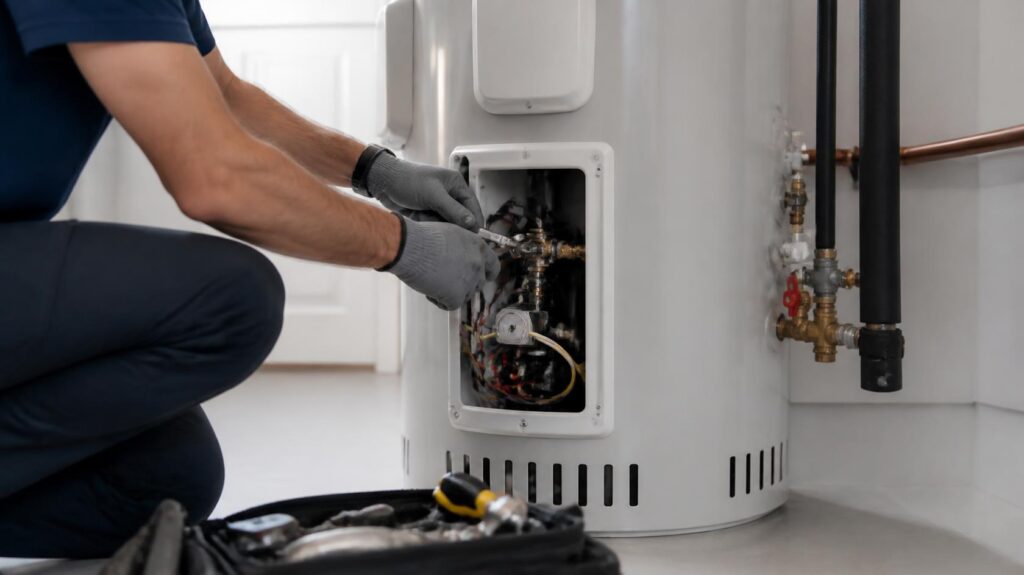
There comes a point in every water heater’s life when continuing to repair it no longer makes financial or practical sense. For Texas homeowners, that point often arrives sooner than expected, driven by the state’s hard water conditions, high seasonal temperatures, and the large proportion of older residential properties still running units well past their intended service life. At Rainstone Water Heaters, we help property owners across Texas assess whether their current unit is worth repairing and guide them through the selection and installation of a replacement that fits their home, their household’s hot water demand, and their long-term energy goals. If you are ready to move forward or simply want an honest assessment, call us today at (817) 580-8562 to book a service with our Texas replacement team.
Replacement is the biggest decision a water heater ever asks of you, and it should be made on numbers, not on a salesman’s urgency. I am Kurt Pinkerton, Rainstone’s responsible master plumber — here is exactly how we help homeowners make that call. Across Texas, that means the same standard in every driveway: a $125 service call, a written quote, and work I am willing to sign my name to. Call us at 817-580-8562 and you will get exactly that.
Recognizing When Water Heater Replacement Is the More Cost-Effective Choice
Age and the Point at Which Repeated Repairs Outweigh the Cost of Replacement
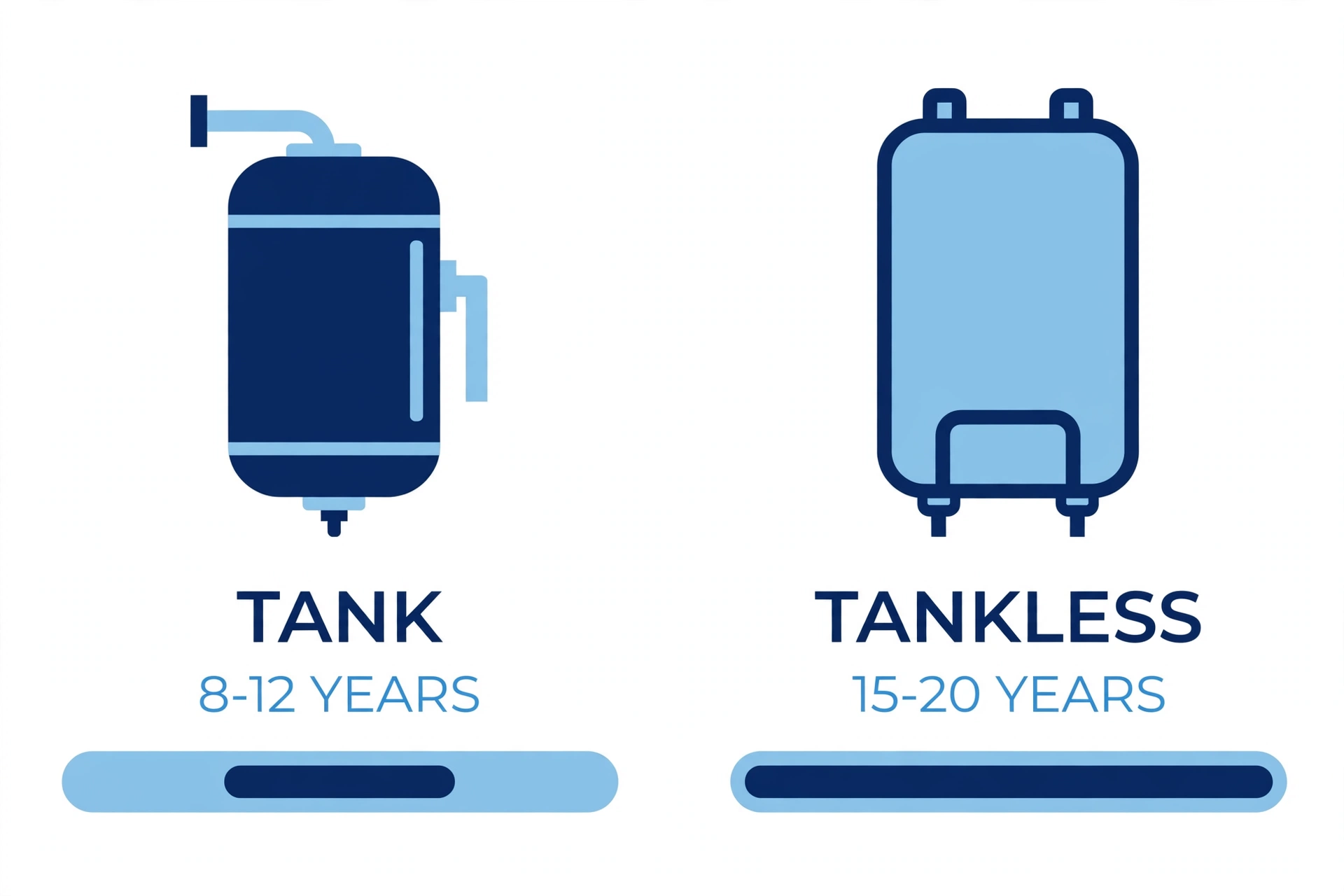
The age of a water heater is one of the most reliable indicators of whether replacement represents better value than continued repair. The standard service life for a conventional storage-tank water heater is generally cited as eight to twelve years for a tank unit, with tankless units typically lasting longer when properly maintained. Once a unit approaches or exceeds this range, the probability of component failures increases significantly, and the cost of individual repairs begins to accumulate in ways that can quickly exceed the price of installing a new, more efficient unit. A single thermostat or element replacement in a relatively young unit is a sensible repair, but the same repair in a ten-year-old unit with signs of internal corrosion is a different financial calculation entirely.
A useful rule of thumb often applied in the industry is to compare the cost of any proposed repair to the age of the unit multiplied by the cost of a replacement installation. If the repair cost exceeds fifty percent of what a new installation would cost, and the unit is more than halfway through its expected service life, replacement is almost always the more economically rational option. Our technicians make this assessment transparent at every service visit, giving homeowners a clear comparison of their short-term and long-term options so they can make an informed decision rather than repeatedly investing in a unit that is unlikely to last much longer regardless of how much is spent on it.
Visible Tank Corrosion and Internal Structural Failure
Rust staining around the base of a water heater, discoloration on the tank shell, or visible moisture weeping from the tank body itself are all signs that the tank has begun to corrode from the inside. Once a steel tank has developed internal corrosion to the point where it is visibly affecting the exterior or the water quality, the structural integrity of the tank cannot be restored through repair. Unlike individual component failures, tank body corrosion is a definitive end-of-life indicator, and attempting to continue using a corroded tank carries a genuine risk of a sudden and potentially serious failure that could cause significant water damage to the property.
Internal tank corrosion progresses faster in Texas properties where hard water supply has depleted the anode rod without the homeowner’s awareness, leaving the tank walls exposed to direct contact with mineral-laden water for months or years. Once a technician confirms that the tank itself has been compromised, replacement is the only responsible recommendation. In some cases, the corrosion only becomes visible after the unit has already begun to fail structurally, which is why early identification through routine inspections is so valuable. Our technicians assess tank integrity as part of every service visit and advise homeowners immediately when the findings point clearly to replacement rather than further repair.
Significant Energy Efficiency Losses in Aging Units
Federal energy efficiency standards for residential water heaters have been updated multiple times over the past decade and a half, and units manufactured before 2015 in particular may operate at substantially lower efficiency ratings than what is achievable with equipment available today. An older water heater that was considered mid-range for efficiency at the time of its installation may now represent one of the least efficient options in the current market, consuming considerably more energy per gallon of hot water produced than a modern equivalent of comparable capacity. In Texas, where households often rely on their water heater year-round and where energy costs are a consistent concern, this efficiency gap translates into a meaningful and ongoing difference in monthly utility bills.
Texas has moved toward stricter energy efficiency requirements for residential appliances in alignment with federal standards, and the Energy Factor or Uniform Energy Factor ratings now required of new units reflect a significant improvement over the performance characteristics of units installed before those standards were introduced. Replacing an old, inefficient unit with a modern, high-efficiency model often delivers monthly energy savings that begin offsetting the replacement cost from the first billing cycle. Our team provides homeowners with an honest comparison of the estimated running cost of their existing unit versus the projected cost of operating a modern replacement, giving them a tangible basis for making the replacement decision.
Capacity and Recovery Rate No Longer Meeting Household Demand
Water heater capacity and recovery rate requirements change as households grow, as families expand, or as a property is converted from one use to another. A forty-gallon tank that was originally installed to serve a two-person household may be entirely inadequate for a family of five, and the result is a persistent shortage of hot water during peak usage periods that has nothing to do with a fault in the unit itself. Similarly, recovery rate, which describes how quickly a unit can reheat a full tank of water after the stored supply has been depleted, becomes increasingly important in properties with high simultaneous demand from multiple bathrooms, appliances, and fixtures.
When a water heater’s capacity or recovery rate is no longer suited to the household it serves, the only effective solution is replacement with a correctly sized unit. Our technicians carry out a demand assessment at the point of replacement consultation, factoring in the number of occupants, the peak usage times, the number of bathrooms and hot water appliances in the property, and the characteristics of the water supply, to recommend a replacement unit with the right capacity and recovery specification for the home. Getting the sizing correct at the point of replacement avoids the common mistake of replacing a struggling unit with a new one of identical capacity that will produce the same inadequate results.
Persistent Discolored Water Indicating Advanced Internal Deterioration
Rust-tinted or brown hot water is a symptom that many Texas homeowners initially attempt to resolve through anode rod replacement or sediment flushing, and in some cases those interventions are successful. However, when discolored water persists after these measures have been carried out, the cause is often internal tank corrosion rather than a correctable component issue. At this stage, the tank lining has deteriorated to the point where it is actively shedding rust particles into the water supply, and no repair short of full replacement will restore the water quality to an acceptable standard.
The rapid expansion of suburban communities in areas including the DFW Metroplex, Greater San Antonio, and the Greater Houston area during the 1990s and 2000s created a large stock of tract homes whose original water heaters are now reaching or well exceeding their expected service life. Many of these properties are only now experiencing the discolored water and reliability issues that signal the end of the unit’s useful life, and the owners are confronting the replacement decision for the first time. Our team is experienced in managing these replacement projects efficiently, removing and disposing of the old unit, installing the new one correctly, and ensuring the homeowner understands how to maintain their replacement unit properly from the outset.
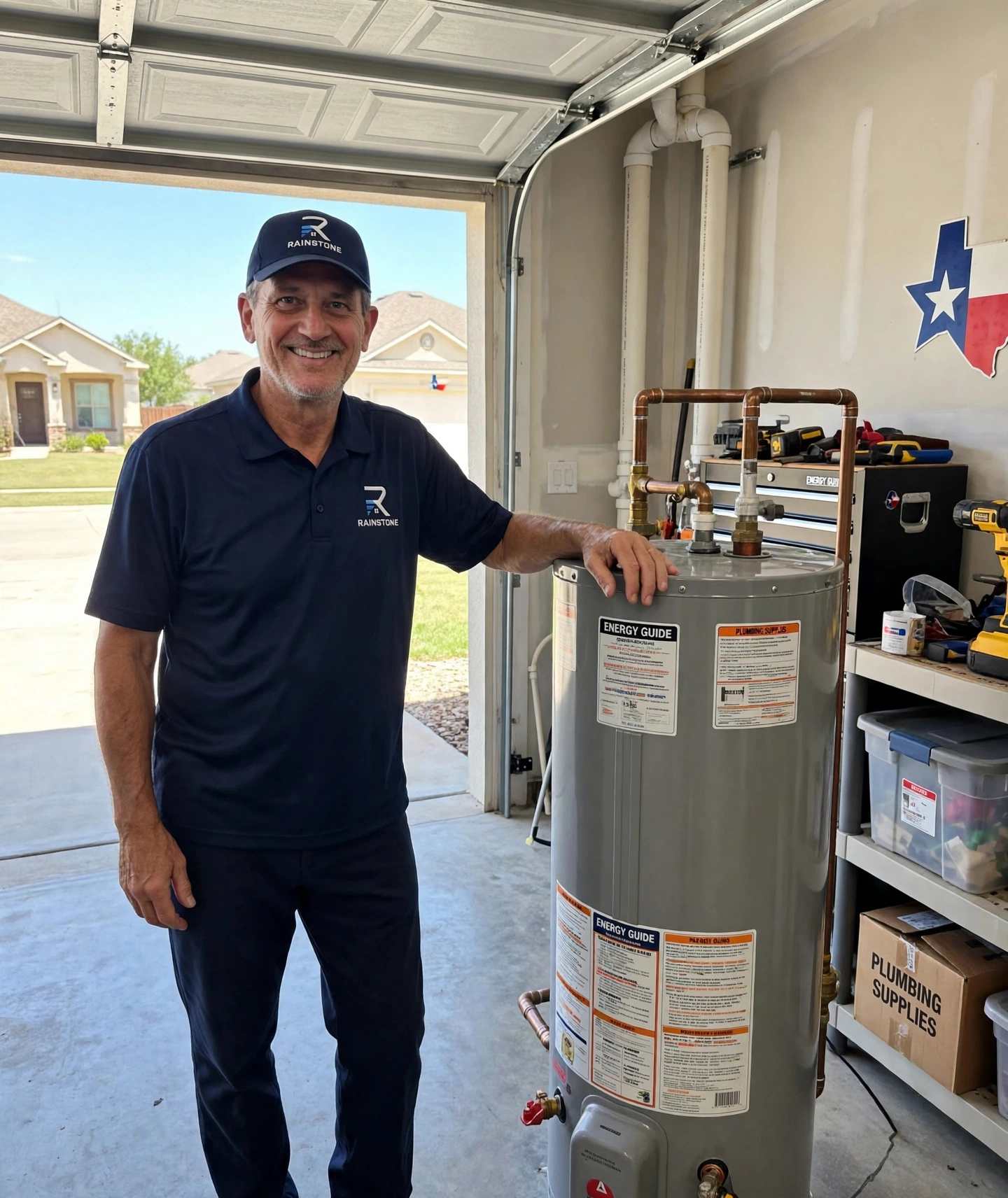
Kurt’s take: After 38 years in this trade, my replacement advice fits in one sentence: swap the heater on your schedule, at a written price, before it picks the day for you. Everything on this page exists to make that possible. — Kurt Pinkerton, Responsible Master Plumber, Lic. # M-21546
Selecting the Right Replacement Water Heater for Your Texas Property
Comparing Tank, Tankless, and Heat Pump Options for Texas Conditions
The water heater replacement decision involves not just replacing a like-for-like unit but also considering whether a different technology type might serve the property better. Traditional storage tank water heaters remain the most common choice for Texas homes and offer reliable performance, straightforward servicing, and the lowest upfront cost of any available option. They are well suited to properties where installation space is adequate, the household’s demand is consistent and predictable, and budget considerations favor a lower initial outlay over potentially higher long-term operating costs. For most standard Texas residential properties, a high-efficiency tank unit remains a sensible and cost-effective choice at the point of replacement.
Tankless water heaters, which heat water on demand rather than maintaining a stored supply, offer a different set of advantages and trade-offs that suit certain Texas properties particularly well. Their compact form factor makes them attractive in properties where installation space is limited, and their ability to deliver a theoretically unlimited supply of hot water suits households with high or variable demand. Heat pump water heaters represent a third option that is particularly relevant for Texas homes, since the technology draws on warm ambient air to heat the water rather than generating heat directly. In Texas, where household air conditioning runs for a significant portion of the year and ambient temperatures remain high even outside peak summer months, heat pump water heaters can operate with substantially higher efficiency than a conventional electric resistance unit, delivering long-term energy cost savings that offset their higher purchase price over time.
Federal Energy Standards and Rebate Opportunities for Texas Homeowners
Selecting a replacement water heater that meets current federal efficiency standards is not only an environmental consideration but also a financial one, given the range of incentives available to Texas homeowners who choose qualifying equipment. The federal Inflation Reduction Act introduced tax credits for residential energy improvements including heat pump water heaters that meet ENERGY STAR certification thresholds, providing homeowners with a meaningful reduction in the effective cost of upgrading to a more efficient unit at the point of replacement. These credits are applied against federal income tax liability and represent a genuine financial benefit for homeowners who would otherwise have defaulted to the least expensive available option without considering long-term running costs.
Beyond federal incentives, some Texas utility providers and local programs offer rebates for customers who replace older units with qualifying high-efficiency models, particularly in the case of heat pump water heaters and certain high-efficiency gas units. ENERGY STAR certified water heaters are the most commonly referenced standard for both federal tax credits and utility rebate programs, and our team can advise homeowners at the point of replacement selection on which available units meet the relevant certification thresholds. Understanding the incentive landscape before making a purchase decision can meaningfully reduce the net cost of a replacement unit and influence which technology type represents the best overall value for a particular property.
Right-Sizing a Replacement Unit for the Property and the Household
One of the most consequential decisions in any water heater replacement project is selecting the correct unit capacity and recovery specification for the property. Undersizing the replacement unit produces exactly the same shortage problems that may have prompted the replacement in the first place, while oversizing results in a unit that stores more hot water than the household uses, incurring unnecessary standby heat loss and energy waste. Getting the sizing right requires an accurate understanding of the household’s peak demand, the number of occupants and bathrooms, the simultaneous draw from appliances such as dishwashers and washing machines, and the incoming water temperature, which varies across Texas by season and geographic location.
For tankless water heaters, correct sizing is determined by the required flow rate in gallons per minute combined with the temperature rise needed between the incoming cold water temperature and the desired output temperature. Texas’s mild winters mean that incoming groundwater temperatures are relatively moderate for much of the year, which works in favor of tankless unit sizing, but summer conditions in South and Central Texas still require careful assessment of the unit’s rated capacity under varying inlet temperatures. Our technicians carry out this assessment as a standard part of every replacement consultation, matching the homeowner with a unit specification that is properly suited to their property from day one of installation.
The Replacement Process With Rainstone Water Heaters
From Unit Selection and Scheduling Through to Installation and Testing
A water heater replacement carried out by Rainstone Water Heaters begins with a consultation that establishes the homeowner’s needs, the property’s configuration, and the available options within their budget. Once the replacement unit has been selected, we coordinate the scheduling of the installation visit to minimize the time the household is without hot water. On the day of installation, our technicians safely disconnect and prepare the old unit for removal, confirm that the installation space and associated plumbing connections are suitable for the new unit, and carry out the installation in accordance with manufacturer specifications and applicable Texas plumbing code requirements.
Following the installation, every new water heater is tested thoroughly before our team leaves the property. This includes checking for leaks at all connections, verifying that the unit reaches the correct target temperature, confirming that the pressure relief valve is seated and functioning as designed, and ensuring that venting or electrical connections are correctly configured and safe. We also walk the homeowner through the basic operation of their new unit, including how to adjust the thermostat, what to do in the event of a fault indicator, and when to schedule their first maintenance service to protect the investment in their new system.
Old Unit Removal and Responsible Disposal Across Texas
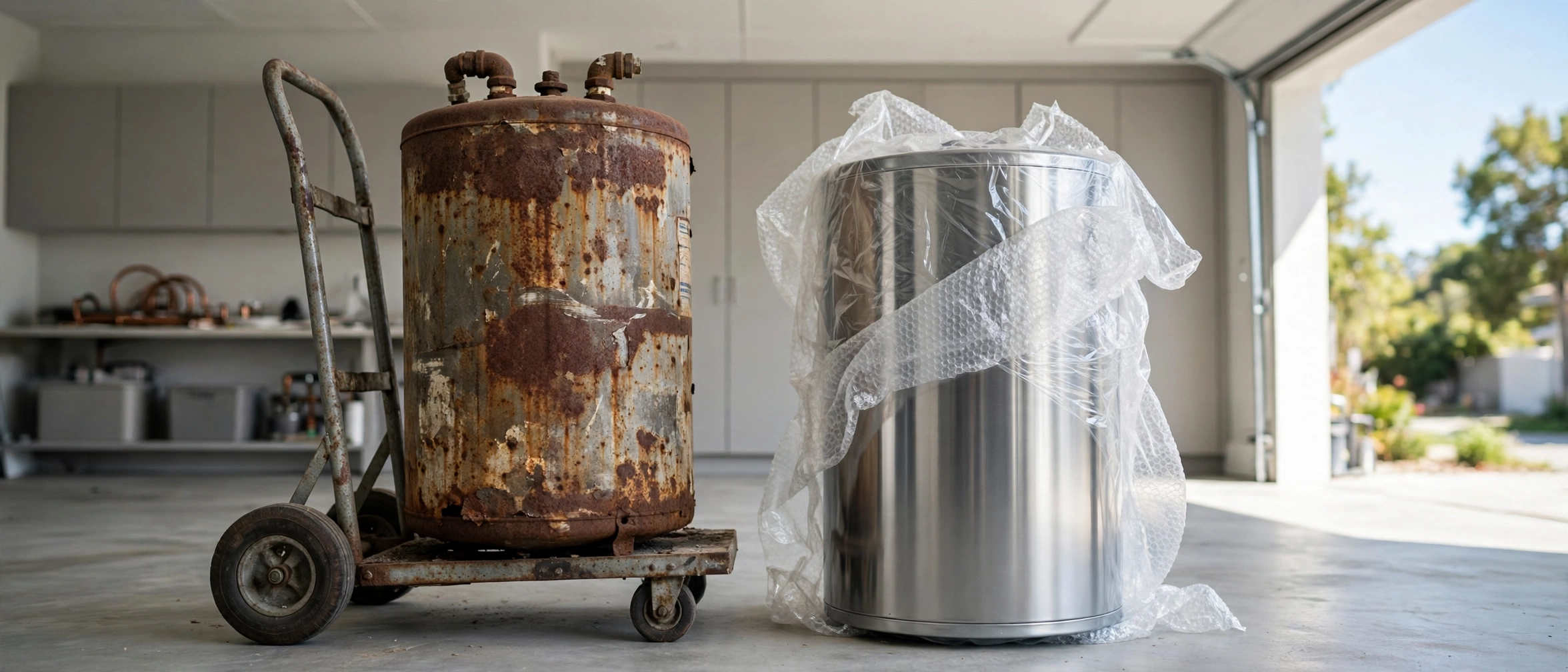
The removal and disposal of an old water heater is a task that homeowners sometimes underestimate in terms of its practical complexity. Tank water heaters are heavy and awkward to maneuver out of tight installation spaces, and disposing of them correctly requires knowledge of local recycling and waste regulations that vary across Texas counties and municipalities. Improper disposal of a water heater, including simply leaving it at a curb without arrangement, can result in fines in some jurisdictions and contributes to unnecessary landfill waste given that steel tanks are highly recyclable materials. Our team handles old unit removal as a standard part of every replacement project, ensuring the discarded unit is transported and disposed of responsibly.
For gas water heaters, disconnection also requires proper handling of the gas supply line and confirmation that the valve is fully closed and capped before the unit is moved. Improper gas line handling during a DIY replacement is one of the more serious risks associated with attempting to replace a gas water heater without professional assistance, and it is one of the key reasons that professional installation is both the safer and the more practical option for the vast majority of Texas homeowners. Our technicians are fully qualified to carry out gas line disconnection and reconnection as part of the replacement process, ensuring the job is completed safely from start to finish.
Arrange Your Water Heater Replacement in Texas With Rainstone Water Heaters Today
If your current water heater is aging, failing, or simply no longer meeting the demands of your household, the team at Rainstone Water Heaters is ready to help you find and install the right replacement. We work with homeowners across Texas to assess their current unit, identify the most cost-effective and energy-efficient replacement option, and complete the installation to a high standard with minimal disruption to the household. Whether you are in the DFW Metroplex, Central Texas, or a rural community elsewhere in the state, our experienced team brings the same thorough approach to every replacement project we undertake. Call us today at (817) 580-8562 to book a service and take the next step toward a reliable, efficient hot water system for your Texas home.
Water Heater Replacement near you:
- Water Heater Replacement in Garland
- Water Heater Replacement in Round Rock
- Water Heater Replacement in San Antonio
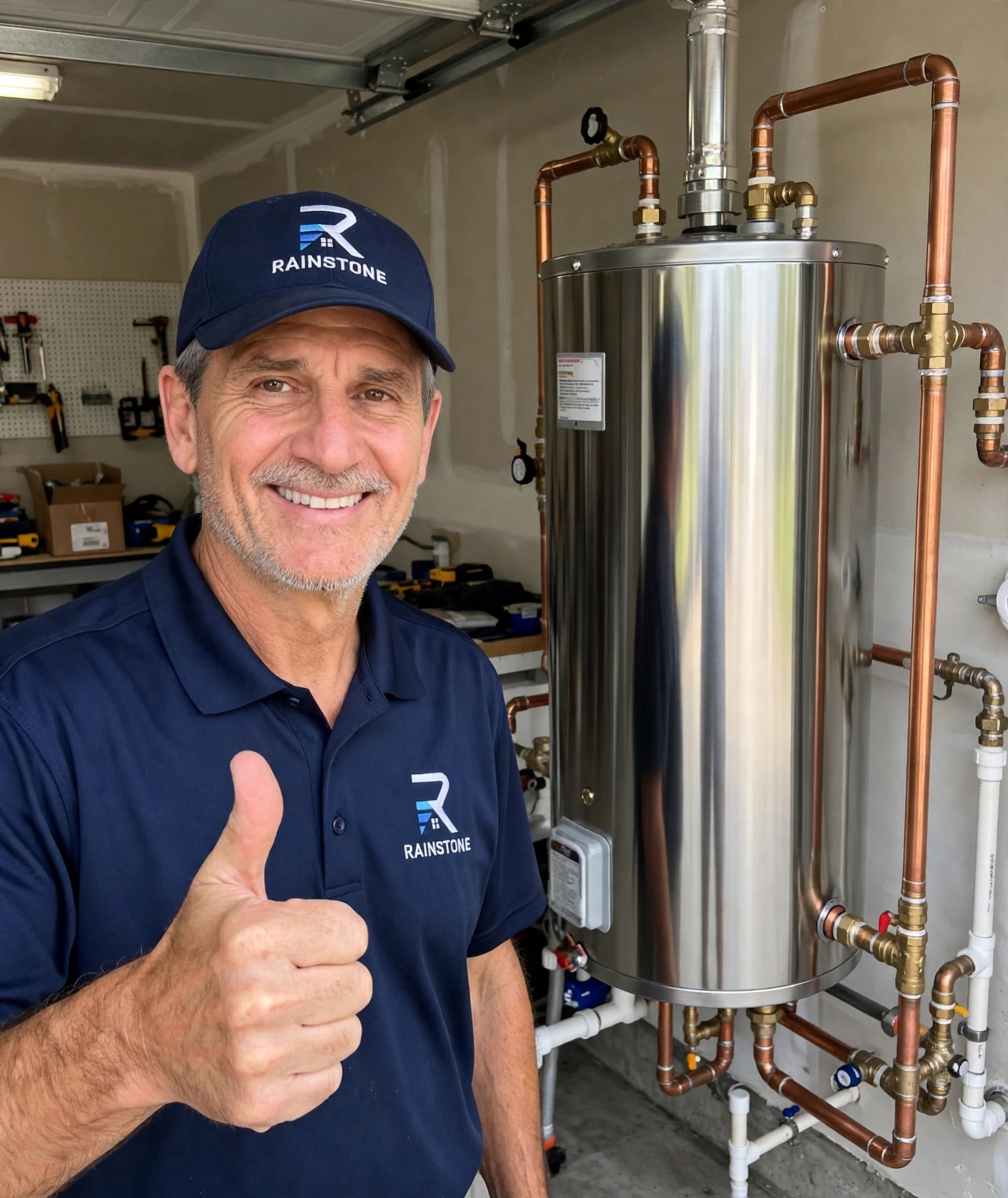
Water Heater Replacement in Texas: the numbers we work by
| Standard tank | Tankless | |
|---|---|---|
| Typical lifespan | 8–12 years | 15–20 years |
| Typical installed range | $1,850–$2,800 | $4,800–$6,000 |
| Replacement tiers | Good $1,850 · Better $2,450 (upgraded tank + expansion tank) | Best from $4,800 |
How we handle it, step by step
- We check the age first. The serial label on your current unit tells us its manufacture date — the same check our free online toolkit walks you through.
- We size for your household, not for the ticket. Occupants, bathrooms, and peak-hour demand decide the size; a bigger invoice does not.
- We handle the permit and the code work. Most Texas cities require a permit for a water heater replacement, and the installation is done to current code — pan, expansion, venting, and T&P discharge included.
- We haul the old unit away and walk you through the new one — temperature setting, shut-off locations, and what your warranty covers.
I am a perfectionist about one thing above all: we leave your home as clean as we found it, or cleaner. A crew that is careless with your floors will be careless with your gas line, and I have believed that through 38 years of plumbing.
My honest take: if your tank is under eight years old and the fault is a part, repair it and keep your money. If it is past ten and leaking from the tank itself, every repair dollar is rent on a unit that is leaving anyway. I would rather lose a replacement sale to a good repair than sell you a water heater you did not need yet — that is how a plumbing company stays in a town for the long run.
For an independent cross-check on the numbers above: the U.S. Department of Energy’s homeowner guidance puts a conventional storage water heater’s service life at roughly 10–15 years and recommends a thermostat setting of 120°F. The lifespan and price figures in our table are the ones Rainstone publishes in its own Texas cost guides — and the ones we stand behind on every written quote.
Ready when you are — call 817-580-8562 any day from 5 AM to 11 PM, and we will take it from there. — Kurt Pinkerton, Responsible Master Plumber, Lic. # M-21546