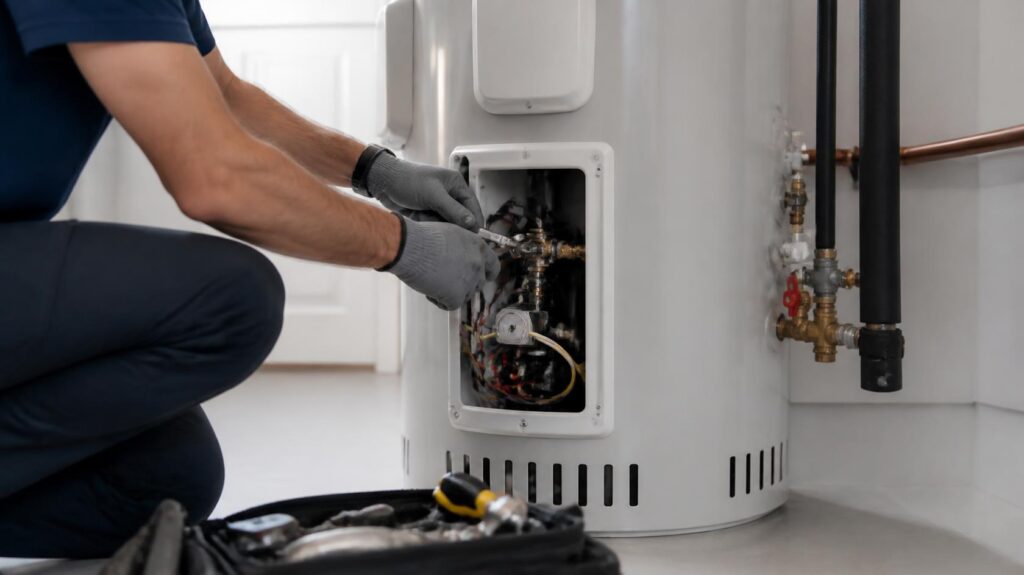
Gas water heaters are common in homes across the country, and when they are installed and vented correctly, they can operate safely for many years. However, any appliance that burns natural gas or propane has the potential to produce carbon monoxide, a gas that cannot be seen, smelled, or tasted. Because the water heater often sits out of sight in a garage, basement, or closet, venting problems can develop without anyone noticing. This makes carbon monoxide one of the more serious, and least visible, risks associated with fuel-burning equipment in the home. A professional water heater inspection is one way to identify conditions that may allow combustion gases to enter living spaces. This article explains how the risk develops, the warning signs to watch for, and what an inspection typically evaluates.
How Gas Water Heaters Can Produce Carbon Monoxide
Carbon monoxide is a byproduct of burning fuel. Understanding where it comes from and how it is supposed to leave the home helps explain why certain problems increase the risk.
Incomplete Combustion
When gas burns with the right mix of fuel and oxygen, it produces mostly carbon dioxide and water vapor. When combustion is incomplete, often because the burner is not getting enough air or is dirty or out of adjustment, the amount of carbon monoxide produced can rise significantly. A burner flame that appears mostly yellow or orange rather than blue may indicate a combustion problem, although flame color alone is not a definitive diagnosis. Soot around the burner compartment or the top of the heater can also point to poor combustion.
Venting Failures and Backdrafting
Even a properly burning water heater produces combustion gases that must be carried outdoors through a vent or flue. If the vent pipe becomes disconnected, corroded, blocked by debris or a bird’s nest, or is sloped incorrectly, those gases may spill back into the room instead of exiting. This is known as backdrafting. Household conditions can contribute as well. Powerful exhaust fans, clothes dryers, or tightly sealed homes can create negative pressure that pulls air down the vent, reversing the normal flow of combustion gases.
Warning Signs Homeowners Should Know
Because carbon monoxide gives no sensory warning of its own, homeowners must rely on indirect clues and detection equipment. Recognizing these signs may allow a problem to be addressed before it becomes dangerous.
Physical Symptoms and Household Patterns
Common symptoms of carbon monoxide exposure include headache, dizziness, nausea, weakness, fatigue, and confusion. These symptoms are often mistaken for the flu or other illnesses. A pattern worth noting is when several people in the home, or pets, feel unwell at the same time, and the symptoms improve after spending time away from the house. Anyone experiencing these symptoms along with a suspected exposure should leave the home and seek emergency medical help right away.
Visible Clues Around the Water Heater
Some physical signs near the appliance may suggest venting or combustion issues. These include soot or scorch marks near the draft hood at the top of the heater, rust or corrosion on the vent pipe, excessive condensation on nearby windows or surfaces, and a pilot light that frequently goes out. None of these signs confirms the presence of carbon monoxide on its own, but each is a reason to have the system evaluated. Carbon monoxide alarms are an essential layer of protection, and the U.S. Consumer Product Safety Commission recommends installing them on every level of the home and outside sleeping areas.
Kurt’s take: At the Dallas Housing Authority, I served as the licensed master plumber, and part of that work was servicing the UV system on a children’s water park. When the people breathing the air are somebody’s kids, you learn to treat invisible hazards as real until the instruments prove otherwise. Carbon monoxide is exactly that kind of hazard. You cannot see it, smell it, or argue with it. So my position is plain: a gas heater’s vent, draft, and burner get checked on a schedule, not after somebody feels dizzy. For your family, that means an inspection is not paperwork — it is the proof that the gas is leaving the house.
What a Carbon Monoxide-Focused Inspection Evaluates
A water heater inspection with attention to combustion safety looks at how the unit burns fuel, how it vents, and how it interacts with the rest of the home. The specific steps may vary depending on the type of heater and local code requirements.
Vent System and Draft Testing
An inspector typically examines the full length of the visible vent, checking connections, fasteners, clearances to combustible materials, and the pitch of the vent connector. Many inspections include a draft or spillage test, in which the technician checks whether combustion gases are being drawn up the flue or escaping at the draft hood. This test may be performed with exhaust fans and other appliances running to simulate real household conditions, since backdrafting sometimes appears only when several systems operate together.
Combustion Air, Burner Condition, and Gas Measurement
Gas appliances need an adequate supply of air for proper combustion. An inspector may assess whether the space around the heater has sufficient ventilation, particularly if the unit is enclosed in a small closet. The burner assembly and flame pattern can also be evaluated for signs of dirt, damage, or improper adjustment. In some cases, technicians use a combustion analyzer or carbon monoxide meter to measure gas levels in the flue and the surrounding air, providing data rather than relying on visual observation alone.
Reducing Carbon Monoxide Risk Over Time
An inspection offers a snapshot of current conditions, but ongoing habits also influence long-term safety. A few practical steps may help lower risk between professional visits.
Keeping the Area Clear and Ventilated
Storing boxes, laundry, or other items against a gas water heater can restrict airflow to the burner. Flammable liquids, such as gasoline or paint thinners, should never be kept near a fuel-burning appliance. If the heater is located in a closet, louvered doors or other ventilation openings that were part of the original installation should remain unobstructed.
Scheduling Evaluations After Changes to the Home
Renovations can affect how a water heater vents. Adding a powerful kitchen range hood, sealing air leaks, replacing windows, or remodeling the room where the heater sits may change air pressure and airflow. Having the system evaluated after these projects, as well as on a regular schedule, may help identify new risks before they cause harm.
The Texas Layout: Garages, Closets, and Combustion Air
The layout of Texas homes adds its own wrinkle to this risk. With few basements in most of the state, the gas water heater usually lives in the garage or an interior closet — steps from bedrooms, not floors away from them. A closet unit depends on its louvered door and vents for combustion air, and a garage unit shares air with stored paint, fuel, and everything else a garage collects. Backdrafting in either spot puts combustion gases into air the household actually breathes.
That is also why the work should sit with licensed hands: Texas plumbers are licensed by the TSBPE, and an inspection is the moment to confirm venting, clearances, and combustion air all still match how the room is used now. If you are sorting out what an evaluation covers, start with the questions homeowners ask us most — then schedule while the warning signs are still just signs.
Protecting Your Household From Hidden Risks
Carbon monoxide risks from gas water heaters are often preventable when venting and combustion problems are identified early. Our team of water heater inspection professionals at Rainstone Water Heaters understands how easily these issues can go unnoticed, and we take a careful approach to evaluating vents, draft, and burner condition. We explain what we find in clear terms so you can decide on the right next step for your home. If your gas water heater has not been inspected recently, or you have noticed any of the warning signs described here, we encourage you to contact our team to arrange an evaluation.
If your gas heater has never had its venting and draft checked, or the last check predates a remodel, book the inspection while it is still a precaution: Rainstone offers same-day service, 5 AM to 11 PM, seven days a week. See also the easy-to-miss problems inspections often catch, and meet the master plumber behind our inspections before we visit.
Thirty-eight years in the trade and 27 as a master plumber teach a man two things: diagnose before you sell, and clean up like you were never there — as clean as it was in the beginning, if not cleaner. That is how I run my crews, and it is how I write this blog. — Kurt Pinkerton, responsible master plumber, Rainstone Water Heaters
