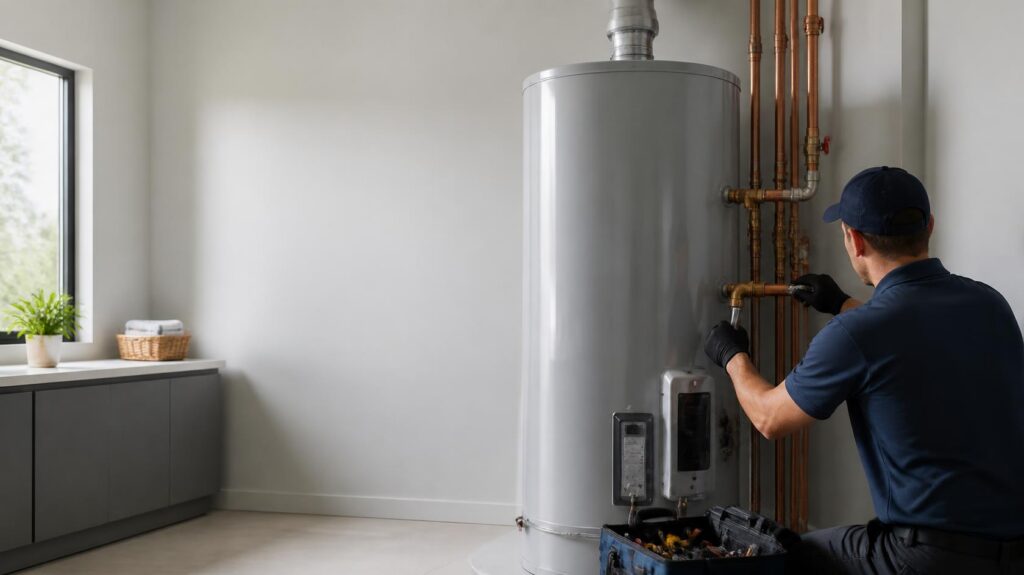
Discovering water around a water heater can be alarming, but the location of the leak often reveals a great deal about its cause and seriousness. A drip from a loose fitting at the top of the tank is a very different problem from water seeping out of the tank’s bottom seam. Some leaks may be minor and repairable, while others signal that the water heater is nearing the end of its life. Knowing where to look, and what each location typically means, can help homeowners describe the problem accurately and make informed decisions about next steps. This guide walks through the most common leak points on tank-style and tankless water heaters and what each one may indicate. When the source is difficult to pinpoint, professional leak detection can help trace water back to its origin.
Leaks at the Top of the Water Heater
The top of a tank-style water heater contains several connections and openings. Leaks here are often related to fittings rather than the tank itself, which can make them more manageable.
Supply Line Connections
The cold water inlet and hot water outlet connect to the top of most tanks. Loose fittings, worn flexible connectors, or corroded pipe nipples at these points can drip steadily. Tightening a fitting may resolve some minor drips, but overtightening can damage threads or connectors and create a larger leak. Corrosion may be more likely where dissimilar metals meet without appropriate dielectric fittings. Water that starts at the top may run down the side of the tank and collect at the base, making it look like a bottom leak, so checking the top is an important first step.
The Anode Rod Port
The anode rod threads into an opening on top of the tank. If the threads were not properly sealed during installation or replacement, or if corrosion has developed around the port, water may seep from this location. A leak here can often be addressed by resealing or replacing the rod, depending on the condition of the surrounding metal. Heavily corroded anode rods can be difficult to remove, which is one reason this work is often handled by a professional.
Leaks From the Tank’s Valves
Most tank-style water heaters have two important valves. The temperature and pressure relief valve is typically located on the side or top of the tank, and the drain valve sits near the bottom. Each has a distinct role, and leaks from each carry different implications.
The Temperature and Pressure Relief Valve
The temperature and pressure relief valve is a safety device designed to open if pressure or temperature inside the tank becomes too high. Water coming from this valve or its discharge pipe may mean the valve is doing its job in response to a real problem, such as excess pressure or overheating. It may also indicate that the valve itself is worn or has debris preventing it from sealing. Because this valve protects against dangerous conditions, it should never be capped or plugged, and any discharge deserves evaluation by a professional. In homes with a closed plumbing system and no expansion tank, pressure from thermal expansion is one possible reason for occasional releases.
The Drain Valve
The drain valve near the bottom of the tank is used for flushing sediment and draining the heater. A slow drip from the spout may result from the valve not being fully closed or from sediment preventing a proper seal. Plastic drain valves used on some models may become brittle with age, which can make them more prone to cracking. Leaks around the base of the valve where it enters the tank can indicate a worn valve or failing threads. Drain valves can often be replaced without replacing the entire water heater.
Kurt’s take: Teaching is how I learned to trace water. I have trained more than 25 people from zero experience to journeyman, and the rule I give every trainee is to start at the highest wet point, never the puddle. Water lies about its origin; gravity edits the story on the way down. My take for homeowners is the same one I give apprentices: dry the unit, watch where moisture returns first, and describe that spot when you call. A caller who can say the anode port is weeping saves us both a round of guessing, and gets the right parts on the truck.
Leaks From the Bottom or Internal Components
Water at the bottom of the heater without a clear source above it often points to more serious issues. These leaks warrant prompt attention.
Tank Corrosion and Internal Failure
The steel inner tank is protected by a glass lining and the anode rod, but over time corrosion can break through. When water seeps from the bottom of the tank itself, internal corrosion is a common cause. Tank body leaks generally cannot be repaired, and they may worsen suddenly. Rust-colored water or visible rust near the base of the tank may accompany this type of failure. In most cases, a leak from the tank body indicates that replacement should be planned soon.
Heating Element Gaskets and Burner Areas
Electric water heaters have heating elements that thread into the side of the tank and seal with gaskets. A worn gasket or loose element can allow water to leak behind the access panel. In gas models, water appearing in the burner compartment may come from a leak higher up, from condensation, or from the tank itself. Because burner areas involve combustion components, inspection is best left to a qualified technician.
Where Tankless Water Heaters Can Leak
Tankless units have no storage tank, but they still contain components that can leak. Their common leak points differ from tank-style models.
Connections and Pressure Relief Valves
Tankless water heaters connect to cold water, hot water, and often gas lines at the bottom of the unit. Loose or worn fittings at these connections are a frequent source of drips. Many installations also include a pressure relief valve, and water from its discharge line may signal a pressure issue or a worn valve that needs attention.
Heat Exchangers and Condensate Lines
High-efficiency condensing tankless units produce acidic condensate that drains through a dedicated line. A clogged, disconnected, or damaged condensate line may cause water to appear near the unit. Condensate lines should route to an appropriate drain, and some installations include a neutralizer that reduces acidity before disposal. Leaks from within the cabinet itself may involve the heat exchanger, which can be affected by scale buildup or corrosion over time.
Tracing a Leak in Texas, and What the Visit Costs
A Texas homeowner who finds water at the base of the tank can keep the first step affordable and clear. Rainstone’s service call is $125, waived in full with replacement, and the quote is written before work starts, so tracing a leak does not commit you to a blank-check repair. Roughly 2 in 5 leaks that look like tank failures turn out to start at the top and travel down the side, which is exactly why the tracing matters. Ask what the tracing visit and common fixes cost up front and expect the answer to follow the source, fitting, valve, or tank, in that order. Hours from 5 AM to 11 PM, seven days a week, mean a leak found at breakfast does not have to run until Monday.
Finding and Fixing the Source With Confidence
The location of a water heater leak can say a lot about whether the problem is a simple repair or a sign of a larger issue, but tracing water to its true source is not always straightforward. Our team of leak detection professionals at Rainstone Water Heaters can inspect your system, work to identify where the water is coming from, and explain what that means for your equipment. We aim to give you an accurate picture so you can plan the right next step. If you have noticed water around your water heater, we encourage you to contact our team for an evaluation.
A small leak carries its own warning, covered in why a small water heater leak should never be ignored, including the damage that builds quietly behind walls. You can also read the background of the plumber who signs off on the repair if you want to know whose standard the work is held to.
Every Rainstone job runs under my license, Lic. # M-21546 — I own the permits and the inspections, and I answer for the work. It is the same accountability I have taught more than 25 apprentices on their way to journeyman: your name is on the job long after the truck leaves. — Kurt Pinkerton, responsible master plumber, Rainstone Water Heaters
