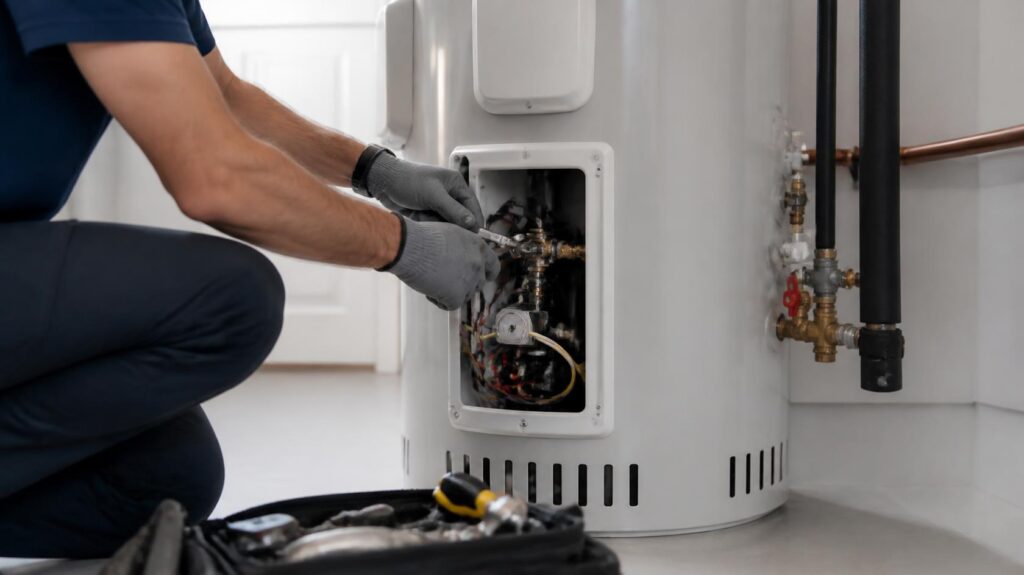
Your water heater works every day to provide hot water for showers, washing dishes, laundry, and other household needs. Like any major home appliance, regular maintenance can help keep it working efficiently and reduce the chances of unexpected problems.
Why Regular Water Heater Maintenance Matters
Over time, sediment and mineral deposits can build up inside a water heater tank. These deposits can make the system work harder, reduce efficiency, and contribute to premature wear.
Routine maintenance can help:
- Improve water heater efficiency
- Reduce sediment buildup
- Extend the life of the unit
- Identify small problems before they become major repairs
- Maintain consistent hot water
- Reduce the risk of unexpected leaks
Kurt’s take: I have trained more than 25 people from zero experience to journeyman, and several of them run their own companies today as master plumbers. The first habit I drill into every one of them is this: maintenance is diagnosis done early, while it is still cheap. A flush, an anode check, and a relief valve test take minutes, and they tell you the truth about a tank years before it leaks. My honest take is that a homeowner who services a heater on schedule almost never meets me on the worst day of that heater’s life — and that is exactly how I want it.
How Often Should a Water Heater Be Serviced?
For most traditional tank water heaters, an annual inspection and maintenance service is a good starting point. Homes with hard water may benefit from more frequent maintenance because minerals can accumulate faster.
Tankless water heaters also require maintenance. Depending on water quality and usage, professional descaling may be recommended periodically to help maintain proper performance.
What a Service Visit Actually Includes, Step by Step
A real service visit follows a sequence, and each step answers a different question about the heater. It starts with shutting off the energy supply — gas to pilot or power at the breaker — and closing the cold-water inlet, so the unit can be worked on safely. The technician then connects a hose to the drain valve and flushes the tank, watching what comes out: clear water is a good sign, while gritty, rusty, or milky discharge shows how much sediment and corrosion the tank has been carrying. On a well-kept tank this takes minutes; on a neglected one, the sediment itself can slow the drain to a trickle.
Next comes the anode rod, the sacrificial rod of magnesium or aluminum hanging inside the tank that corrodes so the tank lining does not have to. The rod is pulled and measured: if it has thinned to a wire core or coated over with calcium, it is replaced — a modest part that can add years to a tank. The temperature and pressure relief valve is then lifted briefly to confirm it opens, discharges, and reseats without dripping. After that, the burner or heating elements, thermostat settings, venting on gas models, and every visible connection are checked, and the tank is refilled and returned to service.
Signs Your Water Heater May Need Attention
You don’t always have to wait for your annual maintenance appointment. Contact a professional if you notice:
1. Discolored Water
Rust-colored or unusual-looking hot water may indicate corrosion or an aging component.
2. Strange Noises
Popping, rumbling, or crackling sounds can occur when sediment collects at the bottom of a tank.
3. Inconsistent Hot Water
If your water isn’t getting as hot as it used to or runs cold sooner than expected, the system may need inspection.
4. Water Around the Unit
Even a small amount of water around your water heater should be checked. A leaking connection may be repairable, while a leaking tank may require replacement.
5. Increasing Energy Bills
A water heater that is losing efficiency may require more energy to provide the same amount of hot water.
How Often Each Type of Heater Needs Service
The right interval depends on the heater in front of you. A standard gas or electric tank should be flushed and inspected once a year; in hard-water homes, flushing every six months keeps sediment from hardening into a layer that is much harder to remove. The anode rod deserves a look every two to three years, and sooner where water is especially aggressive. The relief valve should be tested at every annual visit, because a valve that has sat untouched for a decade may not open on the one day it is needed.
Tankless units trade the flush for a descale. Their narrow heat-exchanger passages collect mineral scale the same way a tank collects sediment, so most tankless heaters in Texas need descaling about once a year, along with a rinse of the inlet filter — more often where water is hardest or the household is large. Heat pump models add an air filter to wash and a condensate drain to check. Whatever the type, the pattern is the same: short, regular service on the manufacturer’s rhythm costs a fraction of one emergency call on a holiday weekend.
When Should You Replace a Water Heater?
Maintenance can extend the life of a water heater, but every unit eventually reaches the end of its service life.
If your water heater is older, requires frequent repairs, has significant corrosion, or is no longer providing reliable hot water, replacement may be more practical than continued repairs.
A professional technician can inspect the system and explain whether repair or replacement makes the most sense for your home.
Texas Water, Texas Heat: Why Service Intervals Shrink Here
A Texas tank lives a harder life than most. Much of the state draws mineral-heavy water, and every heating cycle leaves some of that mineral load behind as sediment on the tank floor. A heater here can collect in a year what a soft-water home might collect in two, which is why the annual service rhythm described above is a floor in Texas, not a ceiling — and why hard-water homes often do better flushing every six months.
Who does the work matters too. Texas plumbers are licensed by the TSBPE, the Texas State Board of Plumbing Examiners, and most Texas cities require replacements to be installed under a licensed master plumber’s registration. A scheduled maintenance visit is the right moment to confirm all of that is in order — and at Rainstone the $125 service call is waived in full when a replacement follows.
Professional Water Heater Service
Regular maintenance is one of the simplest ways to stay ahead of water heater problems. Whether you need routine maintenance, a repair, or a complete replacement, having the system professionally inspected can help you make an informed decision.
Rainstone Water Heaters provides water heater repair, replacement, installation, and maintenance services across our Texas service areas.
If your heater is due — or overdue — the next step is a service visit, not a guess: Rainstone works 5 AM to 11 PM, seven days a week, and every job is quoted in writing before work begins. For the habits that keep problems from starting, read our guide to preventing common water heater problems, and see what a visit costs before you book.
Thirty-eight years in the trade and 27 as a master plumber teach a man two things: diagnose before you sell, and clean up like you were never there — as clean as it was in the beginning, if not cleaner. That is how I run my crews, and it is how I write this blog. — Kurt Pinkerton, responsible master plumber, Rainstone Water Heaters
