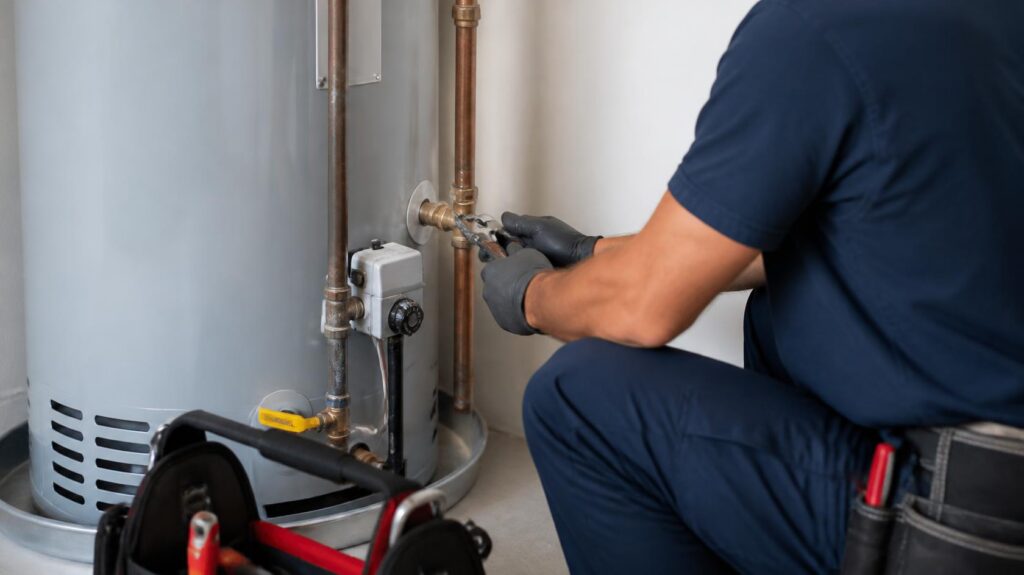
When a new water heater is installed, most homeowners focus on the new equipment and give little thought to what happens to the old one. Yet an old water heater is a large, heavy appliance made of materials that can be handled in several ways, and its disposal may be subject to local rules. The process involves safely disconnecting and draining the unit, removing it from the home, and sending it to a destination such as a recycling facility, a transfer station, or a landfill that accepts it. Understanding this process can help homeowners ask the right questions when comparing quotes and make informed choices if they plan to handle disposal themselves. This article explains how old units are typically removed, what materials can often be recovered, and what options exist for disposal after a water heater replacement.
Removing the Old Unit Safely
Before an old water heater can leave the home, it must be disconnected and emptied. This stage involves hot water, fuel or electrical connections, and considerable weight.
Disconnecting and Draining
The energy supply is shut off first, whether by turning off the gas supply and disconnecting the gas line or switching off the breaker and disconnecting the wiring. The water supply is then closed, and the tank is drained through its drain valve, often using a hose routed to a floor drain or outdoors. In older units with heavy sediment, draining can be slow because debris may clog the valve. Allowing the water to cool first may reduce the risk of burns. Once the unit is disconnected, open gas lines must be capped or connected promptly and water lines secured, since the new unit’s connection points may differ from the old one.
Carrying It Out of the Home
Even when empty, a tank-style water heater is bulky and heavy, and sediment left inside can add noticeable weight. Moving it through doorways, down stairs, or out of an attic or closet may require more than one person and equipment such as an appliance dolly. Care is also needed to protect flooring and walls along the removal path, and residual water may leak from fittings during transport.
What an Old Water Heater Is Made Of
Water heaters contain several materials with potential value to recyclers. Knowing what is inside helps explain why recycling is often possible.
Metals That Can Often Be Recovered
The tank itself is typically made of steel, which is widely accepted by scrap metal recyclers. Other components may include copper, brass fittings and valves, and heating elements or burner assemblies that contain additional metals. The anode rod is usually made of magnesium or aluminum. Many scrap facilities accept whole water heaters, while others may ask that certain parts be removed or that the unit be fully drained. Scrap value for a single water heater is generally modest and fluctuates with metal prices.
Insulation, Linings, and Other Materials
Water heaters also contain insulation, often foam, between the tank and outer jacket, as well as a glass lining bonded to the inside of the steel tank. Plastic components such as dip tubes and control housings are also present. These materials are generally separated during processing at recycling facilities, and what cannot be recovered is typically disposed of according to the facility’s procedures.
Kurt’s take: After 38 years in this trade, 27 as a master plumber, I have hauled out heaters in every condition a tank can reach, rusted through, sediment-heavy, and a few that still looked fine from across the room. My take has not changed: the job is not finished when the new heater lights. It is finished when the old unit is drained, out, and sent somewhere proper, and the space it sat in is clean. A homeowner should never be left holding a 150-pound problem in the garage. If a quote is silent about the old unit, ask, because that silence usually becomes your errand.
Common Disposal Paths
Where an old water heater ends up depends on who removes it, local regulations, and the services available in the area.
Contractor Haul-Away
Many installation professionals remove and dispose of the old unit as part of a replacement job, often taking it to a scrap recycler or approved disposal site. However, this service is not always included by default, and some contractors list it as a separate charge. Confirming whether removal and disposal are included in a quote can help avoid confusion on installation day. Asking where the old unit will be taken may also tell you whether it is likely to be recycled.
Homeowner Disposal Options
Homeowners who handle disposal themselves may have several options. Some municipalities offer bulk item pickup for large appliances, sometimes requiring an appointment or fee. Local transfer stations or recycling centers may accept water heaters, and scrap metal dealers may take them directly. Rules differ widely, and some landfills do not accept large appliances, so contacting the local solid waste department first is a practical step.
Utility and Retail Programs
In some areas, utilities or appliance sellers offer haul-away or recycling programs when a new unit is purchased, and certain utility programs have occasionally offered incentives for retiring older equipment. These programs vary by location and change over time, so checking what is currently available before replacement day may reveal a convenient option.
Special Considerations for Certain Units
Not every water heater is handled the same way. Some types involve additional requirements that affect how they must be processed.
Heat Pump Water Heaters and Refrigerants
Heat pump water heaters contain refrigerant in a sealed system, similar to an air conditioner. Under U.S. Environmental Protection Agency rules, refrigerant must be properly recovered before appliances containing it are disposed of, and venting it intentionally is prohibited. Recovery is typically performed by a certified technician or at a facility equipped to handle refrigerant-containing appliances.
Tankless Units and Electronic Components
Tankless water heaters are much smaller than storage tanks, but they contain circuit boards, sensors, and other electronic components. Their smaller size can make transport easier, although wall-mounted units must be carefully detached from venting and gas connections. Some areas have specific rules for disposing of items with electronics, so checking local guidance can help determine whether a tankless unit should go to a scrap recycler or an electronics collection program.
How Removal Works on a Texas Replacement Job
On a Texas replacement job, removal should be a named line in the quote, not a surprise on installation day. A standard tank installation runs $1,850 to $2,800, and in most Texas cities the work is installed under a licensed master plumber’s registration, with permits handled as part of the project. In Garland, for example, the residential permit is $150 plus a 4.5% technology surcharge. Asking what a complete replacement quote should include before you sign helps you confirm that haul-away, permit, and disposal are accounted for, and where the old unit is headed. Contractor haul-away, when it is included, should say so in writing, along with the destination, so the paperwork matches the promise made at the kitchen table.
Handling the Final Step Responsibly
What happens to an old water heater after replacement depends on local rules, the type of unit, and who handles its removal, and understanding the process can help you plan with fewer surprises. Our team of water heater replacement professionals at Rainstone Water Heaters can explain how removal and disposal are handled as part of your project so you know what to expect from start to finish. We believe clear communication about every step matters. If you are planning a replacement and have questions about what will happen to your old unit, we encourage you to reach out to our team.
If you are still deciding whether replacement day is close, our guide to signs your water heater is nearing the end of its lifespan helps you time it before a failure decides for you. Typical project costs are laid out in our pricing overview, including how installation ranges are built.
I have spent 38 years in this trade, 27 of them as a master plumber, and my license — Lic. # M-21546 — is the one standing behind every job this company runs, permits and final inspections included. That much experience does not make shortcuts acceptable; it makes them unnecessary. — Kurt Pinkerton, responsible master plumber, Rainstone Water Heaters
